
Loading dispatches...
← Return to NewsroomScience
SpaceX launches 24 Starlink satellites to orbit in wake of Starship test flight (video)
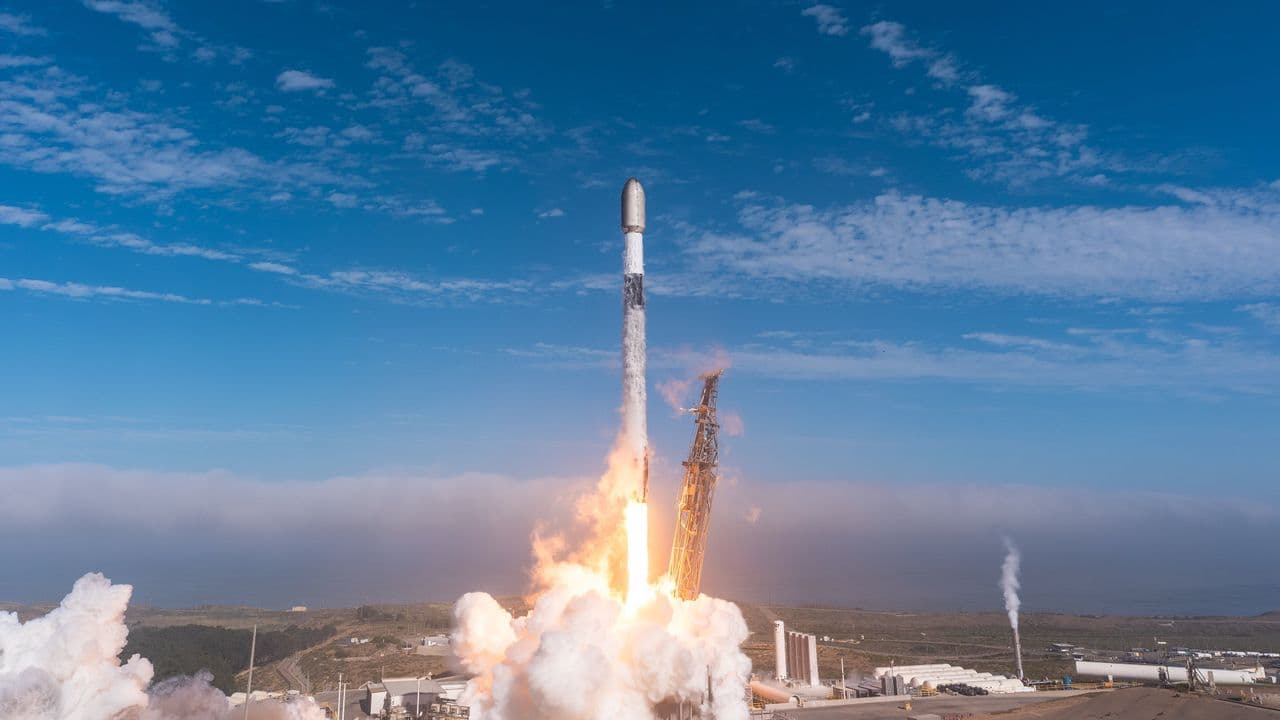
SpaceX launched 24 more satellites for its Starlink network on Saturday (July 25), a day after demonstrating it could do the same on its next-gen rocket.A Falcon 9 rocket carrying Starlink group 17-51 lifted off at 11:51 a.m. EDT (1521 GMT or 8:51 a.m. PDT local time) on Saturday from Space Launch Complex 4 East at Vandenberg Space Force Base in California.About an hour later, the 24 broadband internet satellites were deployed into low Earth orbit (LEO), as planned.Previous Booster B1100 launchesNROL-105 | 6 Starlink missionsThe launch marked the eighth flight of the Falcon's 9 first stage (Booster 1100), which touched down on the "Of Course I Still Love You" droneship, stationed in the Pacific Ocean.The successful launch raised the total number of active Starlink satellites to 10,865, according to satellite tracker Jonathan McDowell. That number had been 20 units higher for about 20 minutes on Friday, when SpaceX conducted a deployment and operations trial during the 13th test flight of its Starship launch vehicle.The Starship test was planned to be short-lived but was successful in providing data to support NASA's decision to fly Starlink systems on its Artemis III crewed mission to LEO, which is scheduled to fly next year.Saturday's launch was SpaceX's 87th Falcon 9 mission of the year.
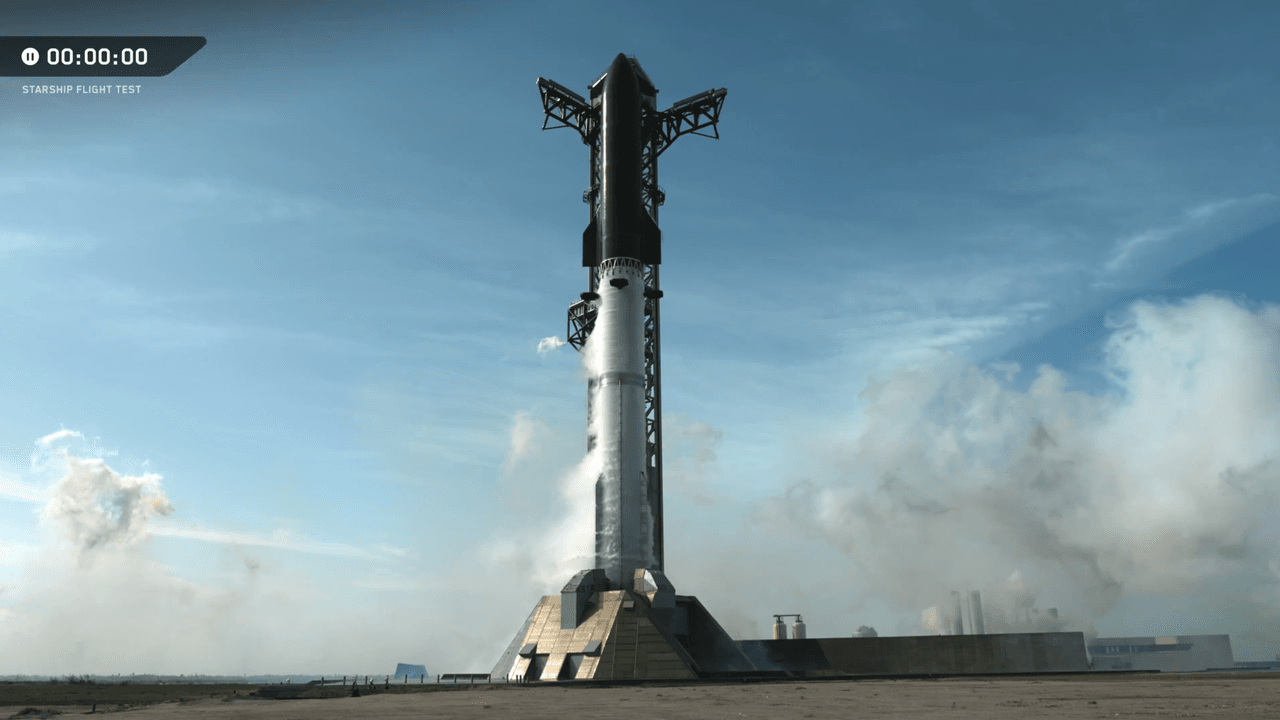
Starship wasn't quite ready to fly today (July 16).SpaceX tried to launch the Starship megarocket on its 13th test flight today but couldn't quite pull it off. Something went wrong just as the giant vehicle's first-stage engines started to fire up, and an abort was triggered.It's too early to say what exactly happened or when SpaceX will try again with Starship Flight 13. SpaceX's second V3 Starship vehicle tries to launch on July 16, 2026. The attempt was aborted at the last second. ("Hopefully, we'll be back real soon for Flight 13 and another attempt to get Starship off the pad," he added.Flight 13 will fly from SpaceX's Starbase site in South Texas. Today's attempt occurred at 6:45 p.m. EDT (2245 GMT; 5:45 p.m. local time), right at the beginning of a 90-minute launch window.Flight 13 will be the second test launch of Starship Version 3 (V3), an upgraded variant of the megarocket designed to get it up to operational status.V3's first jaunt, Flight 12 on May 22, was mostly successful, but there were a few issues. For example, Starship's Super Heavy first stage didn't steer itself back for a controlled splashdown in the Gulf of Mexico as planned, and the Ship upper stage wasn't able to relight one of its Raptor engines in space.Starship V3 will get a second chance on Flight 13, whose goals are similar to those of Flight 12: Get Super Heavy down on target in the Gulf and send Ship most of the way around the world, for a controlled splashdown of its own off the coast of Western Australia. (Ship pulled that off on Flight 12.)There are a few new objectives, however.The most notable is the payload suite flying on Flight 13 — 20 of SpaceX's next-gen Starlink V3 internet satellites. The company wants to build a constellation of 100,000 Starlink V3 spacecraft in low Earth orbit using Starship, and Flight 13 will mark the satellites' first-ever trip to space.They won't stay up there, however; the spacecraft will be deployed on Ship's suborbital trajectory and will crash back to Earth after about 20 minutes, according to SpaceX.Six of the 20 Starlinks going up on Flight 13 will be equipped with cameras, to image Ship's heat shield. SpaceX did this with a couple of V2 Starlinks on Flight 12 as well. Michael Wall is the Spaceflight and Tech Editor for Space.com and joined the team in 2010. He primarily covers human and robotic spaceflight, military space, and exoplanets, but has been known to dabble in the space art beat. His book about the search for alien life, "Out There," was published on Nov. 13, 2018. Before becoming a science writer, Michael worked as a herpetologist and wildlife biologist. He has a Ph.D. in evolutionary biology from the University of Sydney, Australia, a bachelor's degree from the University of Arizona, and a graduate certificate in science writing from the University of California, Santa Cruz. To find out what his latest project is, you can follow Michael on Twitter.
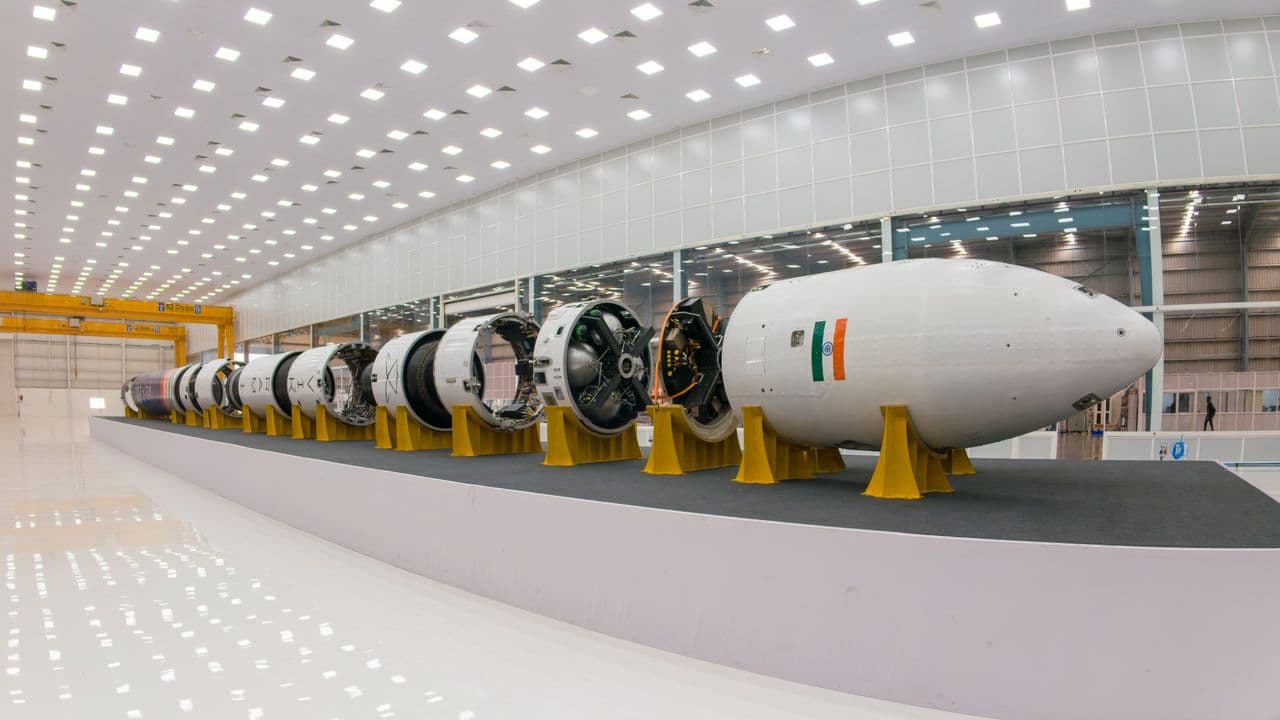
Skyroot Aerospace's Vikram-1 rocket is seen inside the company's Infinity Campus in Hyderabad, India. (com visited Skyroot Aerospace's Max-Q campus here in February, the company's first orbital rocket, Vikram-1, was still coming together.Inside the company's 55,000-square-foot (5,110 square meters) rocket factory, engineers sat before computer screens, running critical simulations and systems checks on Vikram-1's Orbit Adjustment Module, the liquid-fueled upper stage that stands at the center of the room and will guide the rocket's final maneuvers in space. Unlike the rocket's three solid-fueled lower stages, the upper stage can restart its engine, allowing Vikram-1 to deploy multiple customer satellites into different orbits during a single mission.At the time, it was one of the last major components awaiting an overnight transport to the Satish Dhawan Space Centre in Sriharikota, where the rocket's lower stages had already arrived for final integration. Aerial view of Skyroot Aerospace's Infinity Campus in Hyderabad, India, showing a life-size model of the company's Vikram-1 rocket outside. (If all goes as planned, Vikram-1's mission, named Aagaman — Sanskrit for "arrival" — will place multiple customer payloads into low Earth orbit, at an altitude of 280 miles (450 kilometers). Success would be historic: No private Indian company has ever launched a satellite to orbit.The manifest includes Skyroot's SCOPE satellite; a technology demonstration from the German company DCUBED; Indian startup Grahaa Space's SOLARAS S3 satellite; and Embrace, a robotic arm designed to capture debris in orbit, from fellow Indian company Cosmoserve Space.Vikram-1 will also carry two symbolic payloads — a floral-shaped artwork called Cosmic Bloom from the lab-grown-jewelry company Cosmos Diamonds, and a miniature 18-karat gold rocket by artist Ajay Kumar Mattewada that honors Indian scientific pioneers Vikram Sarabhai (after whom the Vikram rocket series is named), C.V. Raman and A.P.J. Abdul Kalam.A successful mission would also move Skyroot closer to its goal of offering dedicated launches for small satellites that require precise orbital destinations. Rather than flying as secondary payloads aboard larger rockets, customers would be able to purchase missions tailored to their own orbital requirements — a model most successfully employed these days by the California-based company Rocket Lab.Skyroot co-founder and CEO Pawan Kumar Chandana likens the strategy to booking a cab rather than taking a train."The 'cab' market is what we want to put our mark on with the Vikram series," Chandana told Space.com. "There are very few opportunities for customers to reach customized orbits today."Aagaman is the first of three planned development flights intended to validate Vikram-1 before Skyroot begins commercial operations. If the vehicle performs as expected, the company hopes to scale production to one orbital rocket a month from its two Hyderabad campuses, according to Chandana."The whole idea is to go there as prepared as possible and to attain as much data as possible from the launch, so that we can get to fast-paced, high-frequency launches as soon as possible," he said.Skyroot first drew headlines in 2022, when its Vikram-S vehicle became the first privately developed Indian rocket to reach space.The vehicle was a suborbital technology demonstrator, climbing to an altitude of roughly 54 miles (88 km) before falling back to Earth. (That's above the boundary of space according to some, but not all, metrics.) According to Chandana, about 80% of the technologies now flying on Vikram-1 — includi
Discussion (0)