
Loading dispatches...
← Return to NewsroomScience
July's full Buck Moon leads a mini planet parade through the summer sky tonight
The full Buck Moon rises tonight. m. EDT on July 29 (1436 GMT), when the lunar disk will appear fully illuminated.
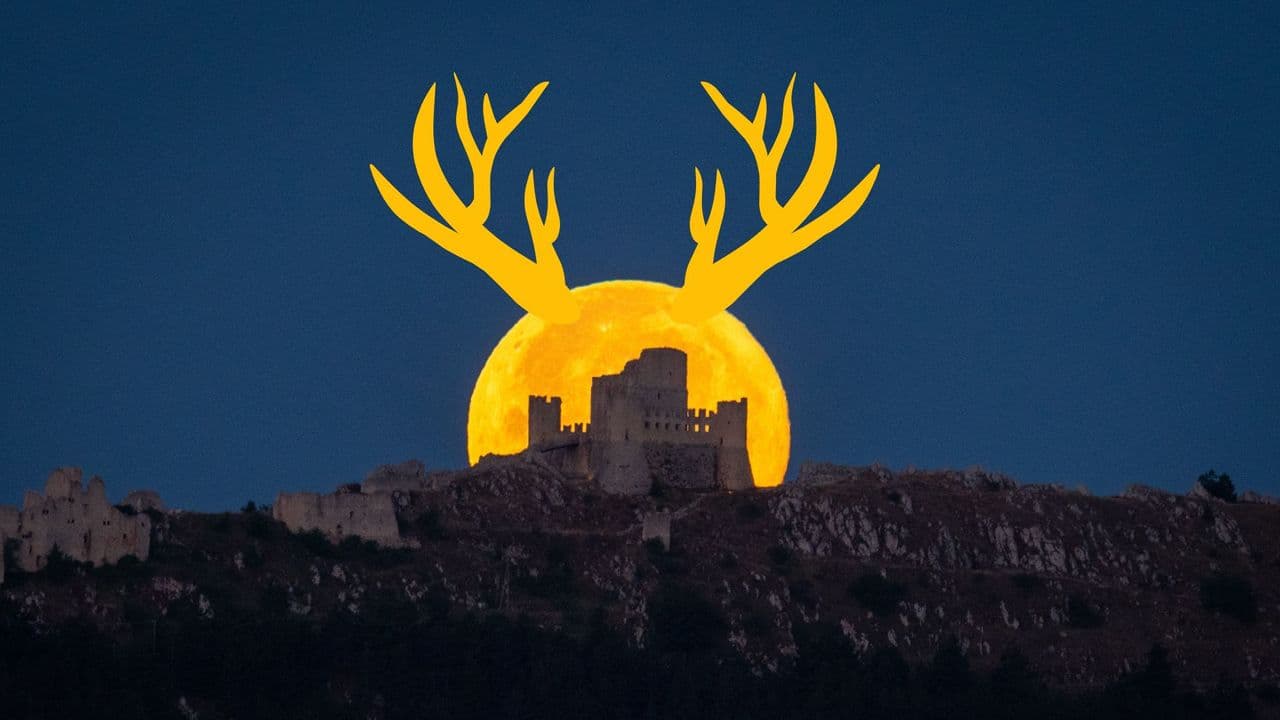
The full Buck Moon rises tonight. m. EDT on July 29 (1436 GMT), when the lunar disk will appear fully illuminated.
The full Buck Moon rises tonight. ( Here's what you need to know.July's full moon phase occurs at 10:36 a.m. EDT on July 29 (1436 GMT), when the lunar disk will appear fully illuminated. It's often called the Buck Moon, to reflect the time when young male deer grow out their antlers. It has also been named the Berry Moon by the indigenous Anishinaabe people and as the Thunder Moon by the Western Abenaki people, according to the Old Farmer's Almanac.Look to the southwestern horizon at sunset to catch the full Buck Moon as it creeps slowly into the summer sky. The moon may appear particularly large at moonrise thanks to a phenomenon known as the "Moon Illusion", where our brains trick us into perceiving it as larger than it actually is while close to the horizon. You might also see it adopt a yellow-orange hue as Earth's atmosphere scatters the bluer wavelengths of its light as it travels low in the sky.Celestron SkyMaster Pro 15x70 ( The 15x magnification and 70mm objective lenses deliver sharp contrast along the terminator and lunar details that pop, but make sure you grab a tripod for steady views._Celestron SkyMaster Pro 15x70 reviewSunlight strikes the moon head on during July's full moon phase, leaving no shadows to emphasize the presence of the countless craters that litter the lunar surface. It's a perfect time to explore the dark lunar seas that scar the moon's surface, where ancient lava flows once flooded networks of impact basins, then hardened billions of years ago, repaving vast swathes of Earth's natural satellite.Grab a pair of binoculars or a telescope and look a little closer. You'll find a network of bright streaks intersecting as they travel outward from youthful impact craters. These features are known as ejecta rays, and were created when material cast out in violent impacts fell back onto the lunar surface. Every crater on the moon once had its own set of ejecta rays. However, all but the most recent have since faded into obscurity due to space weathering. Mercury, Mars and Saturn follow the full moon through the summer sky in the early hours of July 30. ( Saturn, Mars and Mercury will rise in the east to trail the moon in a majestic arc as it treads a ponderous path from east to west through the summer sky.Want to capture the incredible predawn lineup for yourself? Then be sure to check out our guide to photographing the planets, along with our expert tips on photographing the moon. You can also read our roundup of the best cameras and lenses for astrophotography to ensure that you're ready for the next big skywatching event.Editor's Note: If you would like to share your astrophotography with Space.com's readers, then please send your photo(s), comments, and your name and location to . Anthony Wood joined Space.com in April 2025 after contributing articles to outlets including IGN, New Atlas and Gizmodo. He has a passion for the night sky, science, Hideo Kojima, and human space exploration, and can’t wait for the day when astronauts once again set foot on the moon.
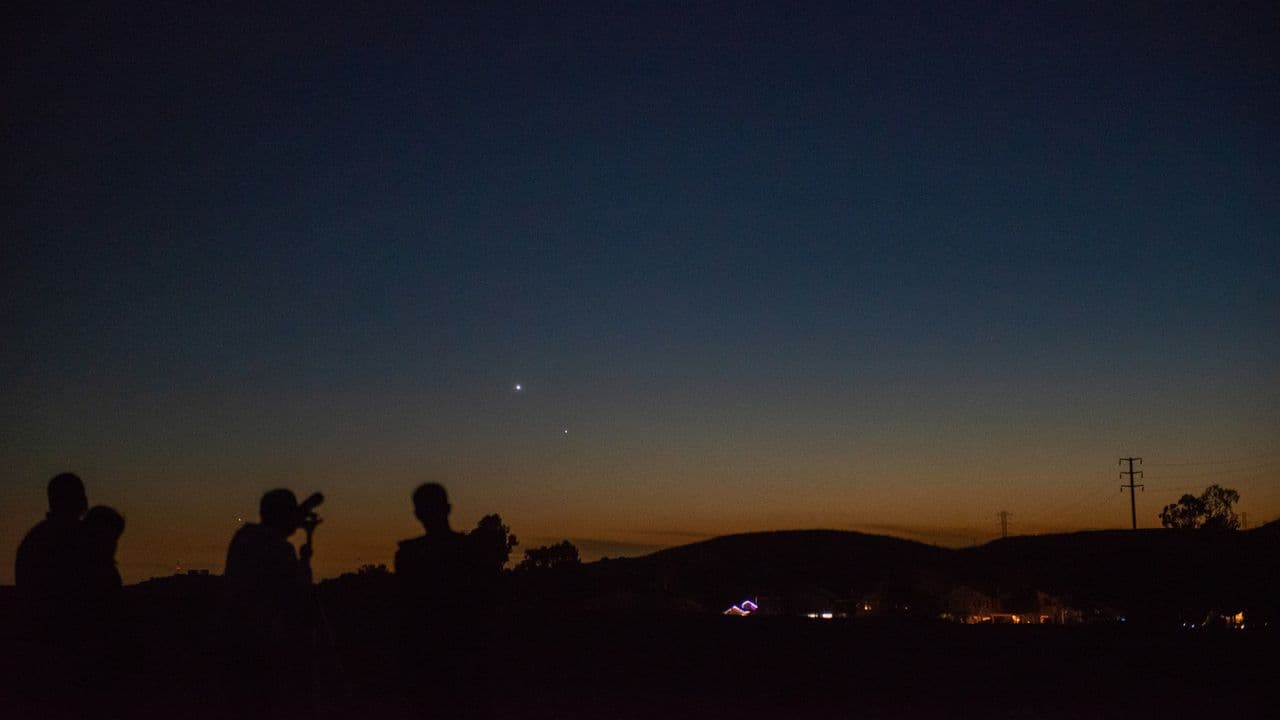
A slender crescent moon, Mars and Aldebaran and two sparkling star clusters will create a beautiful predawn scene for early risers on July 11. (A slender waning crescent moon, softly glowing with earthshine, will appear to align with the orange light of Mars, the orange-red star Aldebaran, with the sparkling Pleiades and Hyades star clusters close by. Together, they will form a beautiful morning tableau in Taurus — one well worth setting an alarm to see.First: the moonMost obvious is, of course, the moon, appearing as a lovely waning crescent, 14% illuminated. It rises around 2:00 a.m. local daylight time and will likely appear as a thin arc of light enclosing a ghostly ball. Here is one of nature's beautiful sights and fits the old saying, "the old moon in the new moon's arms." Leonardo da Vinci (1452-1519) was the first to recognize it as earthshine. That faint bluish-gray light is light from Earth reflected toward the moon. Earth's light, of course, reflects sunlight, so earthshine is really sunlight that is reflected off Earth to the moon and reflected toward Earth.Next: MarsThe second object is a planet: Mars. It will appear as an orange-yellow star roughly five degrees below and slightly to the right of the moon. Your clenched fist held at arm's length measures roughly 10 degrees in width, so Mars will hover roughly 'half a fist-width" below the lunar disk.Mars rises around 2:40 a.m. local time and is about 15 degrees above the east-northeast horizon by dawn. So as the eastern sky begins to lighten up, Mars will be about "one and a half fist-widths" above the horizon.It currently resides within the boundaries of the zodiacal constellation of Taurus the Bull. Mars remains rather inconspicuous, but its luminosity continues to increase as we gain on it in our smaller, faster orbit, though it is a very slow process. The planet moves from 17.5 light minutes away on July 1 to 15.4 light minutes by Sept. 1, brightening ever-so-slightly from magnitude +1.3 to +1.2. At its closest approach this coming February, Mars will be only 5.6 light minutes from Earth and will appear to shine fully 10 times brighter than it does now. On July 11, looking low toward the east about 90 minutes before sunrise, skywatchers will see an eye-catching alignment of the crescent moon, Mars and the bright orange star Aldebaran, accompanied by the beautiful Pleiades and Hyades star clusters. (0/Simulation Curriculum.)Finally: AldebaranShining about 5.5 degrees below and slightly to the right of Mars will be a similarly hued, orange-red star, appearing to shine nearly twice as bright as the planet. That will be Aldebaran, marking the angry right eye of Taurus. Aldebaran is the fourteenth brightest star in the sky and lies 67 light-years from Earth. This is a red giant star, 45 times larger than our sun, 1.6 times more massive and over 400 times as luminous. Aldebaran is older and redder than the sun and is preparing to fuse its lightweight core into heavier elements, which are common among stars of its type. Aldebaran has a surface temperature of about 6,760 degrees F (3,738 degrees C). And Aldebaran is really a double star; its companion is much smaller and far dimmer, with an overall mass less than half that of the sun and only about one-third as large.Incidentally, although it appears among them, Aldebaran is not actually a member of the V-shaped Hyades cluster. But it's much closer to us in space than the other Hyades stars, so it's simply an "innocent bystander," but nicely completes the V-shaped face of the Bull in our sky. Henry M. Neely (1879-1963), a long-time lecturer at New York's Hayden Planetarium, wrote in his book: A Primer for Stargazers:"When Taurus is in the night sky, it is well worth the while of any stargazer to beg, borrow or
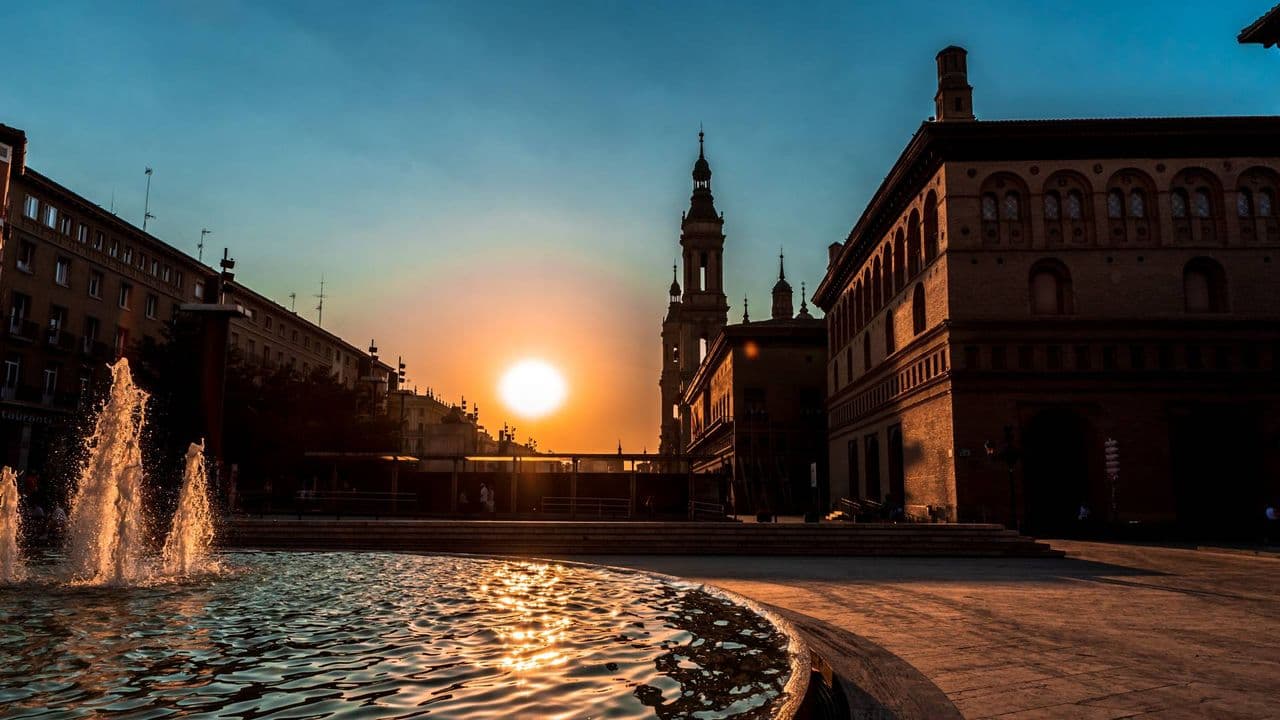
The Cathedral-Basilica of Our Lady of the Pillar in Zaragoza will experience totality shortly before sunset. ( 12, 2026, total solar eclipse, Spain's great cities will be pulling in eclipse-chasers from across Europe, but not every famous destination is equally well placed. In Barcelona and Madrid, the eclipse is a near miss — dramatic on paper, yet ultimately disappointing. Madrid gets a 99.96% partial eclipse, which means no totality, so no corona, no twilight sky and no plunge in temperature. Cue a mass exodus from Spain's two biggest cities in search of totality.To experience a total solar eclipse, you need to be inside the narrow path of totality stretching across northern Spain, from the northwest coast to the east coast. Timing and geography matter because this is a very low-sun eclipse, with totality arriving close to sunset. Coastal beaches, riverbanks, hilltop miradors and elevated parks with unobstructed west-northwest horizons will become prime real estate for one of Europe's most anticipated astronomical events. Here are 10 cities for the eclipse, with recommended viewpoints.Essential resources for checking and re-checking intended destinations for totality include Xavier Jubier's Interactive Google Map, which has timings and built-in sight lines from Peak Finder, as well as The Eclipse App, Eclipse Horizon Checker and the Instituto Geográfico Nacional. However, nothing beats being in place the night before to check for trees and other obstructions at the time of the eclipse. All times and cloud statistics come from Time and Date and are for totality only.1. Valladolid Clear skies are likely in Valladolid. (m. CEST; 1 minute, 29 secondsHeight of eclipsed sun above west-northwest: 8.7 degreesChance of clouds: 19% (since 2000)Surrounded by flat land and with an excellent chance of clear skies, Valladolid is one of the top spots for the eclipse. There will be some clear sight lines from the east bank of the Pisuerga River, specifically its Playa de las Moreras river beach, though buildings will complicate things, so play it safe and head to the Parque Urbano de las Contiendas on the west side.2. Palencia The cathedral in Palencia, Spain. (m. CEST; 1 minute, 42 secondsHeight of eclipsed sun above west-northwest: 8.7 degreesChance of clouds: 23% (since 2000)One of the destinations most likely to have clear skies, Palencia is surrounded by flat, open landscapes perfect for viewing a low-altitude eclipse. Key locations include the scenic Mirador de Palencia, overlooking the city from the southwest, and the elevated Cristo del Otero, overlooking the city from the north.3. León The cathedral of Santa Maria and the old town of León. (m. CEST; 1 minute, 44 secondsHeight of eclipsed sun above west-northwest: 10 degreesChance of clouds: 26% (since 2000)This historic city south of the Cantabrian Mountains is bound to be one of the hotspots for the eclipse. Considered one of the best spots to watch the sunset because of its panoramic views of the city, Mirador de las Lomas (specifically Mirador de Las Lomas Tres), overlooks León from the east and offers panoramic sunset views across the city.4. Zaragoza Zaragoza's Puente de Piedra bridge and Basilica of Nuestra Señora del Pilar. (m. CEST; 1 minute, 23 secondsHeight of eclipsed sun above west-northwest: 6 degreesChance of clouds: 19% (since 2000)On the Ebro River between Madrid and Barcelona, Zaragoza is b
Mercury, Venus, and Jupiter align low over the western horizon after sunset, creating a satisfying mini planetary parade and a perfect astrophoto opportunity using a wide-angle lens or even just a smartphone.Even though Venus and Jupiter have drifted apart slightly since their tight embrace on June 9, Mercury has climbed up beautifully from the sun's glare to join the party. Together, they form a striking slanted line along the ecliptic in the west-northwestern sky right after sunset.This is a high-speed game. The optimal viewing window starts exactly 30 minutes after your local sunset and lasts for only about 30 to 45 minutes before Jupiter and Mercury follow the sun below the horizon.Look for blazing Venus first — it will pop out while the sky is still bright. Drop your eyes down and slightly to the right to easily spot Mercury and Jupiter.For observers using telescopes or imaging equipment, June 12 also offers an interesting opportunity to compare the appearance of the three worlds. Venus will show a small, intensely bright, 80%-illuminated gibbous disk, while Mercury will present a stark contrast with its 50%-illuminated "half-moon" phase. Resolving a clean, tiny half-Mercury in twilight is an elite visual feather in any amateur's cap. Jupiter will appear as a much larger disk, although its low position above the horizon means atmospheric turbulence may blur some detail. Under steady conditions, advanced imagers may be able to capture hints of the planet's famous equatorial cloud belts alongside Mercury's sharply defined silhouette. Approximate positions of the three planets on June 12 at 9 p.m. local time. ( Put away the prime-focus telescope adaptors and grab a 50 mm to 85 mm prime lens on a DSLR/mirrorless camera. Expose for the deep twilight sky colors and frame the three planets as a slanted cosmic ladder ascending over a crisp local silhouette — like a mountain ridge, a distant city skyline, or a line of pine trees.If you're looking for a telescope or binoculars to observe the night sky in more detail, our guides for the best binocular deals and the best telescope deals can help. Our best cameras for astrophotography and best lenses for astrophotography can help you get ready to capture the next stunning skywatching event.
Discussion (0)