
Loading dispatches...
← Return to NewsroomScience
America at 500: Where will we be in space in 2276?
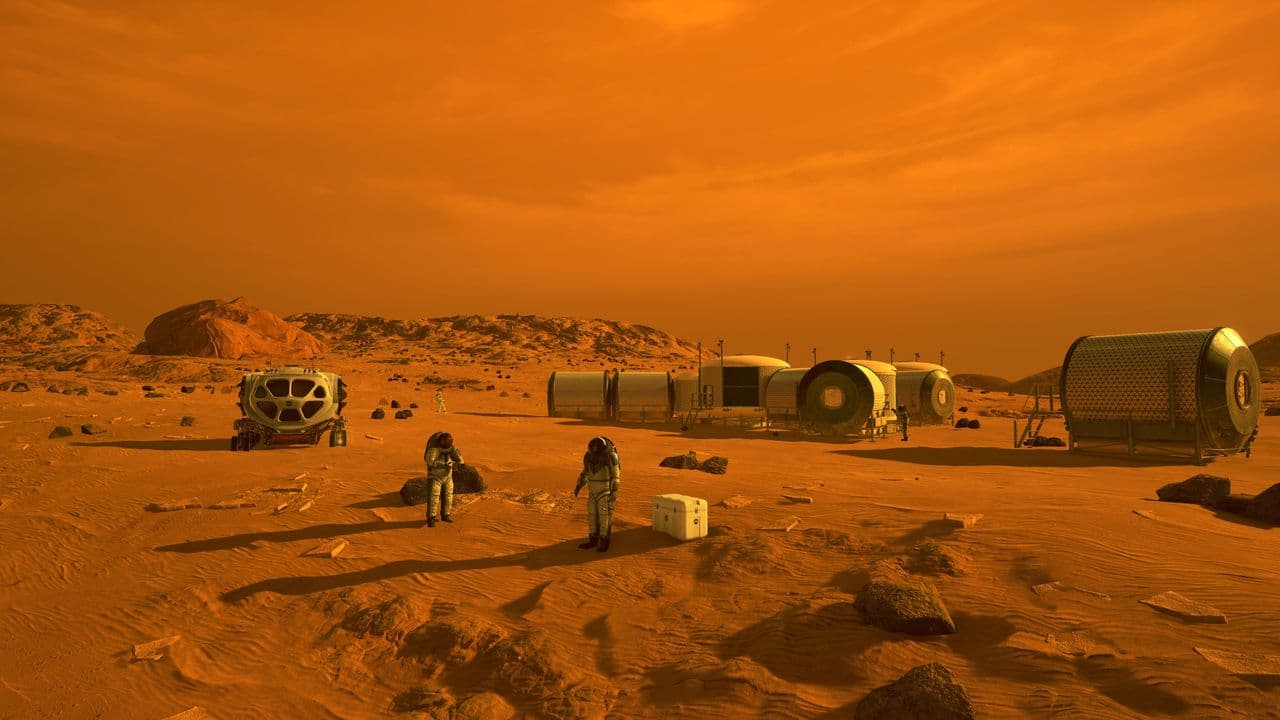
Artist's concept of astronauts and human habitats on Mars. (The nation has put people on the moon, helped build and operate a long-running space station in low Earth orbit (LEO) and sent fleets of robotic explorers to many corners of the solar system — and even beyond it, into interstellar space.All of this work has been done relatively recently, as the space age didn't dawn until 1957; when the U.S. was born on July 4, 1776, humanity was still seven years away from even balloon-borne flight. Where might we be another 250 years from now, on the nation's 500th birthday, should it be fortunate enough to live that long? Trying to see that far into the future is so difficult as to be a fool's errand, but it's fun. So let's have a brief and far from exhaustive crack.A vibrant in-space economyThe United States and other space powers have already established an off-Earth economy — one based on the activities of communications satellites. Companies like Vantor and Planet sell imagery to a variety of customers, for example, while others like SpaceX (via its subsidiary Starlink) and Viasat provide internet service from above.That nascent industry will doubtless expand greatly over the next 250 years, and we're already seeing some of the directions it may go. For instance, space tourism has gotten off the ground; wealthy people can book trips to suborbital space, and the super-rich can fly all the way to Earth orbit, as the experience of NASA chief Jared Isaacman shows. (Isaacman, a tech billionaire, has funded and commanded two missions around our planet using SpaceX hardware.)We've also seen the dawn of in-space manufacturing, with companies such as Made In Space making stuff off Earth and bringing it down for analysis (and eventually, if all goes to plan, sale). This is a field that could really explode over the coming years and decades, according to Dava Newman, director of the Human Systems Lab at the Massachusetts Institute of Technology, who served as deputy administrator of NASA from 2015 to 2017."If you give me a nice big time horizon to look at, I've actually always thought it would be a pharmaceutical breakthrough — manufacturing, more medical-related," Newman told Space.com.That's because the microgravity environment is great for growing flawless crystals, potentially enabling a newly efficient and effective production line for a wide range of pharmaceuticals and other high-value goods. The California company Varda Space recently demonstrated this potential, successfully crystallizing a stable form of the HIV drug ritonavir in one of its orbital "minifactories" and bringing the drug safely down to Earth. Varda Space's third reentry capsule landed in South Australia's Koonibba Test Range on May 13, 2025 (May 14 local time). ( Futurist, astrophysicist and sci-fi author David Brin pointed to asteroid mining, which several American companies, including AstroForge and TransAstra, are investigating seriously already."That's where the riches are," Brin told Space.com.Those riches come in several forms. For starters, many asteroids are thought to harbor considerable amounts of water, which humanity could leverage for life support and split into oxygen and hydrogen, key components of rocket fuel. Space-rock mining could therefore enable the operation of off-Earth propellant depots, which would allow voyaging spacecraft to top off their tanks on the go and explore the solar system more deeply and ambitiously.Then there are the metals — industrial-grade stuff like iron and nickel, which could feed the off-Earth manufacturing industry, and precious species such as platinum. So there are huge economic opportunities for us in the asteroid belt, according to Brin.“The question is, will we be
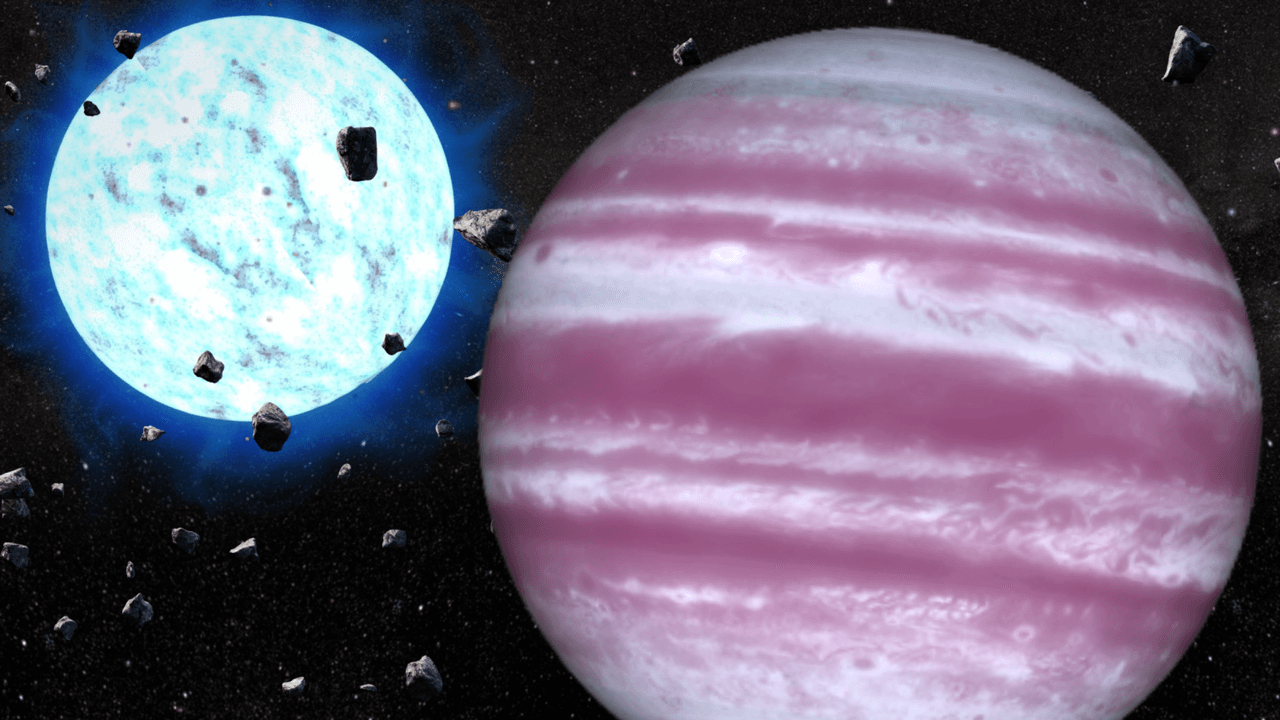
An illustration of the exoplanet WD 1856 b orbiting its dead star ( This "life after death" system gives scientists a portentous vision of what the solar system may look like in around 6 billion years after the sun has exhausted the hydrogen in its core, shed its outer layers, and left behind a smoldering white dwarf stellar remnant.Prior to the final stages of that transformation, our star will have become a red giant, swelling out to many times its original radius, swallowing the inner rocky planets including Earth but leaving the outer planets — although changing them irrevocably. Reflecting this, the white dwarf at the heart of this research is orbited by a Jupiter-sized exoplanet, designated WD 1856 b. As WD 1856 b orbits its dead parent star, it crosses or "transits" the face of this white dwarf, known as WD 1856+534. By observing these transits with the JWST, the team was able to measure the mass and temperature of this Jupiter-like planet while also observing the composition of its atmosphere. To their surprise, they found WD 1856 b is hotter than expected. They also discovered how this planet came to have such an unusually tight orbit around its host white dwarf star."We're used to looking back in time when we use telescopes, but this is the first time we have been able to look forward to what might happen to the outer planets around the remnant of a sun-like star; it's like using a time machine to peer into the distant future of our solar system," team leader Ryan MacDonald from the University of St Andrews in Scotland said in a statement. "This is just the beginning of our exploration of planets orbiting dead stars with Webb, and the search for further planets orbiting white dwarfs is ongoing. "Our results show that stellar death is not the end — some planets experience a vibrant and lively future after the death of their star."The team's research was published on Wednesday (July) in the journal Nature.Survivor planet is a real oddballThe gas giant WD 1856 b was first discovered in 2020 by NASA's exoplanet-hunting spacecraft TESS (Transiting Exoplanet Survey Satellite) and the Spitzer Space Telescope. TESS detects exoplanets using the tiny dips in starlight they cause as they transit their host stars, blocking starlight.This was the first intact planet ever discovered closely orbiting a white dwarf. What immediately stood out about WD 1856 b was how close its orbit is to its white dwarf host. The orbit is around 2% the size of Earth's orbit around the sun and takes just 1.4 Earth days to complete."The planet is quite the oddball. It's about the size of Jupiter, but the white dwarf it orbits is the size of Earth, so the planet is seven times larger than its star," MacDonald said.The planet couldn't have always been in such a close orbit to its star. If it had, it would have been obliterated when the star transformed into a red giant before shedding its puffy outer layers and leaving behind a white dwarf. An illustration showing NASA's exoplanet hunter TESS. ( "One is that the planet was swallowed by the host star as it was dying, and managed to survive on the inside. The other is that the migration took place due to the gravitational effect of other objects in the system. The white dwarf is part of a triple star system, and the outer companion stars could have influenced WD 1856 b's orbit."The clue that allowed the team to differentiate between these migration mechanisms was the temperature of WD 1856 b, which at 260 degrees Fahrenheit (127 degrees Celsius) is about 240 degrees hotter than it would be if its only source
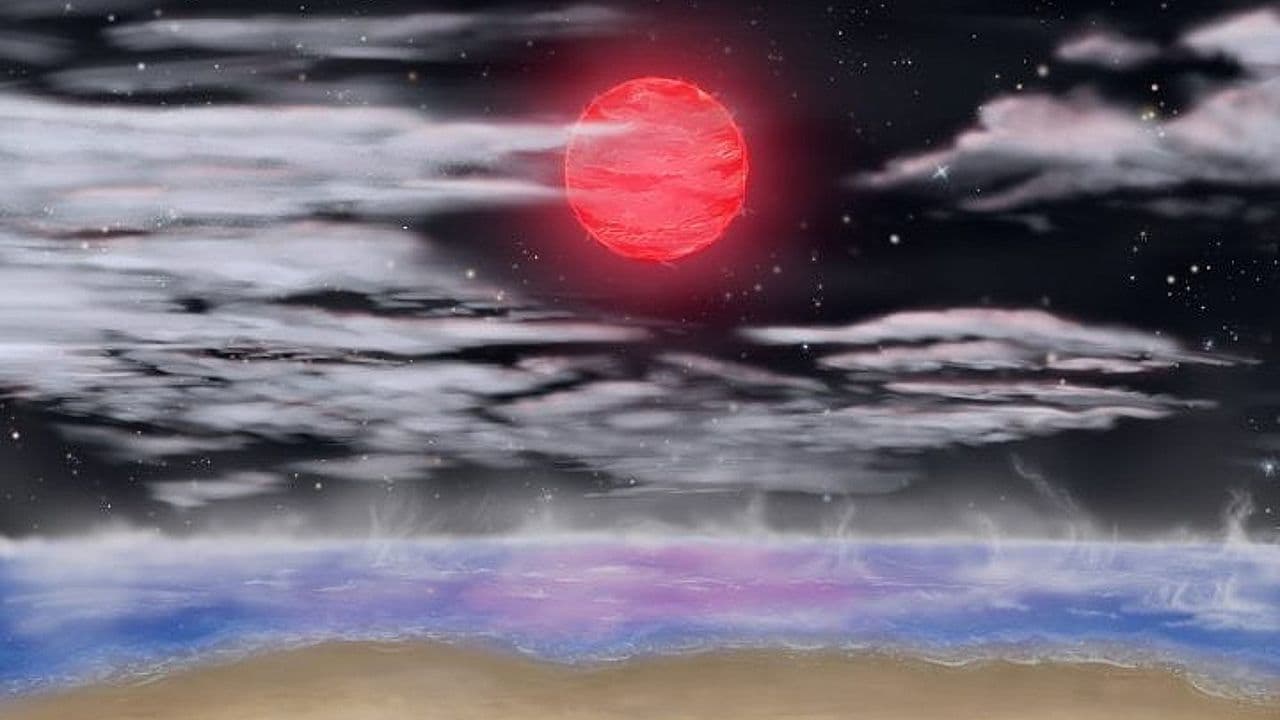
An artist's conception of the view from the surface of the habitable-zone super-Earth exoplanet GJ 3378b. (However, faced with a hostile wind of radiation from its host star, it remains unclear whether this new exoplanet supports an atmosphere, or the possibility of life. Nevertheless, astronomers are celebrating the discovery."This one's exciting," said Paul Robertson of the University of California, Irvine, in a statement. "It's one of our closest cosmic neighbors. Twenty-five light years sounds like a long way, but the Milky Way is about 100,000 light years across, so in that respect it's our next-door neighbor."The planet, designated GJ 3378b, orbits the faint red dwarf star in the constellation of Camelopardalis, the Giraffe. It was discovered in 2024 by French astronomers using the Canada–France–Hawaii Telescope in Mauna Kea, but American astronomers have revised those initial findings, revealing that the planet is possibly more like Earth than we realized.All we know for sure is the mass and the orbit of GJ 3378b. We do not yet know whether it is like Earth or not – it could have land and sea and clouds and life, or it could be airless and cratered.The planet is not seen to transit, or pass in front of its star, blocking its light from our vantage point. Instead, GJ 3378b was detected by the effects of its gravity tugging on its parent star. This causes the star to wobble around the center of mass that it shares with the planet, a wobbling that is betrayed by a Doppler shift in the star's light that can be measured by its spectra, the wavelengths of light that it emits.When it was discovered in 2024, its mass was measured to be 5.26 times the mass of Earth, putting it in mini-Neptune territory of being a larger, mostly gaseous world. However, by taking a second look at the planet using two different telescopes, Robertson's team was able to show that the planet's true mass is 2.3 times the mass of Earth. This means that it is closer to being a rocky super-Earth instead.Furthermore, the same observations found that GJ 3378b's orbital period is 21 days, not the 25 days that had originally been measured. This means that the planet is closer to the star than had been thought, sitting comfortably within the habitable zone where temperatures will be suitable for liquid water on the surface of a planet with an atmosphere. So from that point of view, the chance of GJ 3378b being habitable, if not inhabited, seems fair."This super-Earth gets about 90% of the radiation from its host star that Earth gets from its sun, so it's right in the sweet spot," said Robertson. The WIYN 3.5-meter telescope at the Kitt Peak National Observatory near Tucson, Arizona, one of the two telescopes used to discover exoplanet GJ 3378b. ( This raises the question, does GJ 3378b even have an atmosphere?Currently there is no way to tell. The James Webb Space Telescope (JWST) has been probing for atmospheres around other rocky worlds orbiting red dwarfs, such as those in the TRAPPIST-1 system. It does so by transit spectroscopy, where an atmosphere wrapped around a planet absorbs some of the star's light filtering through it, leaving dark absorption lines in the star's spectrum.Unfortunately, GJ 3378b does not transit its star. This means that astronomers will have to wait until the 2040s, when NASA's Habitable Worlds Observatory will hopefully launch, to answer the question of whether GJ 3378b really does have an atmosphere or not.Still, astronomers are hopeful. GJ 3378b is right on the edge of the zone where planets are expected to be seriously battered by radiation, meaning it could have esc

(Roughly a decade ago, Star Fox Zero almost killed the franchise for good. The ill-fated Wii U entry's structure and plot stuck staggeringly close to Star Fox 64 (Lylat Wars for us PAL gamers), but no one could definitely answer if it was a remake, reboot, reimagining, or something else entirely.It being a remake wouldn't have mattered, except that Star Fox 64 3D (for the little brave 3DS) had already done that with strong results. Now in 2026, we're still flying around the same planets with 'Star Fox'.Considering Fox McCloud's secondary role in the recent Super Mario Galaxy Movie, you'd expect Nintendo to push onward with an all-new game in the enduring science fiction rail shooter series, yet Star Fox seems fated to play the greatest hits again and again. Fortunately, it nails what made Star Fox 64 so enduring and is the most complete take on Team Star Fox's greatest adventure.The story is the same: The mad scientist Andross is exiled to the unwelcoming planet of Venom by General Pepper for almost destroying Corneria, the fourth planet of the Lylat system. ( Some time passes, and Andross launches an all-out attack against Lylat's forces, so it's time for Team Star Fox (now captained by Fox McCloud, James' son) to set things right.And yes, his last name is Fox, and he is a Fox. If you're new to the series, there are no humans in this universe, only anthropomorphic animals.While Star Fox doesn't sacrifice the original's arcade-y nature (you can 'beat it' in under two hours), it makes space for meatier cutscenes which better define the characters and the high stakes of the story.It's all simple stuff with no real room for twists and turns that never gets in the way of the game's fast pace, but Velan Studios' effort is a commendable reminder that even extremely faithful remakes can add to a classic formula. Shoutout to the new arrangements of memorable musical themes from the original, too; the orchestral refresh simply sounds amazing. ( Fox McCloud doesn't look nearly as stylish as in past Star Fox games — or as he does in this year's Mario Galaxy flick — while team members like Slippy Toad (who seems slippery) and Falco Lombardi land right in uncanny valley territory. There's a distinct charm to Star Fox's art direction — and the conversation surrounding the toons proves it — but the presentation no doubt raises the question of how much realism is too much realism for a property as cartoony as this.The Arwings, enemy ships, and other vehicles look absolutely dashing and move with a smoothness that would've made Nintendo kids in the 1990s levitate, though. Both during missions and in cutscenes, there's speed and weight to the stars of the show, and smaller touches like laser beams briefly illuminating the environments remind us how far graphics have come.The same could be said about the colorful levels; from Corneria to Solar, there's a vividness to Star Fox's many space locales that sometimes can be even distracting when the screen is filled with foes and incoming attacks. ( The control scheme could be more intuitive, but it's not too complex; moving around the screen, executing evasive maneuvers, and shooting down enemies feels snappy. Some of the latter levels weren't as 'tight' as I'd hoped for, but maybe that's just me still adjusting to the
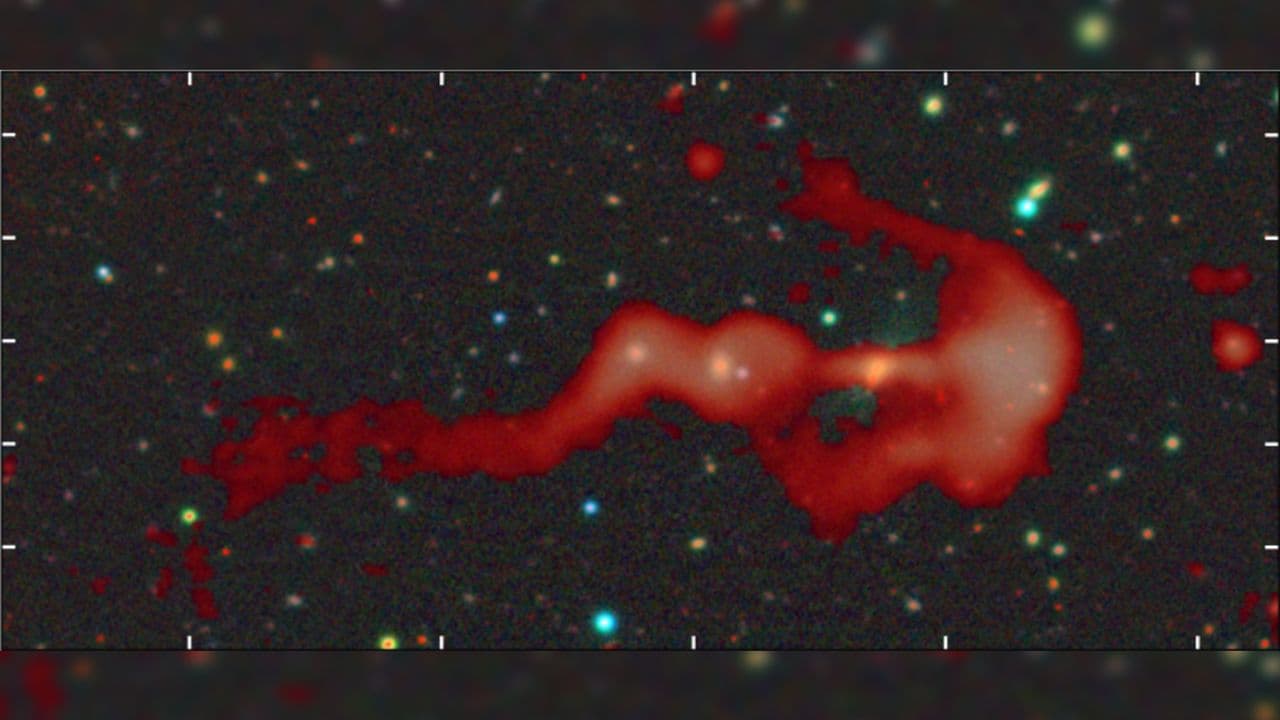
The RAD-BAARG radio galaxy. ( (2026) and the RAD@home Collaboratory) A bizarre radio galaxy discovered by a citizen scientist has left astronomers puzzled, revealing a never-before-seen "bow-and-arrow" structure that could offer rare insight into how galaxies are reshaped by colossal shock waves as they plunge through galaxy clusters.Named RAD-BAARG (short for Radio Bow-And-Arrow Radio Galaxy), the object spans nearly 1.8 million light-years across, making it almost 18 times wider than the Milky Way. Its unusual structure was first identified by a citizen scientist participating in the RAD@home Astronomy Collaboratory, which allows volunteers to review telescope data and flag unusual features that might otherwise be missed.Astronomers say they haven't seen anything like it. "The structure of this source is unlike that of any radio galaxy I have seen in the last 25 years," the University of Mumbai's Ananda Hota said in a statement published by the Royal Astronomical Society. The statement adds that astronomers believe the structure may be "one of the clearest known radio signatures of a giant bow shock generated by a galaxy falling supersonically into a cluster environment."Following its discovery, researchers studied the object using observations from the LOFAR (Low Frequency Array) Two-meter Sky Survey (LoTSS), one of the deepest low-frequency radio surveys ever conducted and particularly well suited to detecting faint, diffuse radio emissions.Unlike typical radio galaxies, which produce two relatively symmetrical jets of charged particles powered by supermassive black holes, RAD-BAARG has a dramatically lopsided appearance. One jet feeds a wedge-shaped region that curves backward into an enormous arc, while the other twists into an S-shaped structure before fading into a long tail. Together, the features resemble a bow with an arrow drawn across it, according to the statement.The radio-emitting plasma from RAD-BAARG appears to illuminate an otherwise extremely faint, extended feature. At these low radio frequencies, aged and diffuse electron populations become more visible, allowing astronomers to trace structures that are otherwise invisible at optical or higher radio frequencies, making surveys like LoTSS especially powerful for identifying and confirming such diffuse emission.Researchers believe the extreme asymmetry may be linked to the galaxy's motion through a dense galaxy cluster. As it falls toward the cluster's center, it likely moves at supersonic speeds through the hot, diffuse gas that fills the space between galaxies. This motion is thought to generate a bow shock that compresses magnetic fields and charged particles, reshaping the radio-emitting plasma into large-scale structures. The LOFAR array in the Netherlands is the world's largest and most sensitive radio telescope. (0)The team also found that RAD-BAARG resides in a complex "multi-halo" environment containing several overlapping reservoirs of hot gas, making it an especially valuable system for studying how galaxy clusters influence radio galaxies."LOFAR allows us to see this faint, low-surface-brightness emission in remarkable detail," Pratik Dabhade, co-lead author of the study from the National Center for Nuclear Research in Poland, said in the statement."With LoTSS DR3 and the future Square Kilometre Array Observatory (SKAO), we may find many more systems where radio galaxies reveal otherwise invisible interactions between jets, galaxies, and their environments."If confirmed, RAD-BAARG could become a key example of how extreme cluster environments reshape radio galaxies, providing new insight into how supermassive black hole jets interact with their surrounding environments.The findings were published June 22 in the journal Monthly Notices of the Royal Astronomical Society: Letters. Samantha Mathewson joined Space.com as an intern in the summer of 2016. She received a B.A. in Journalism a
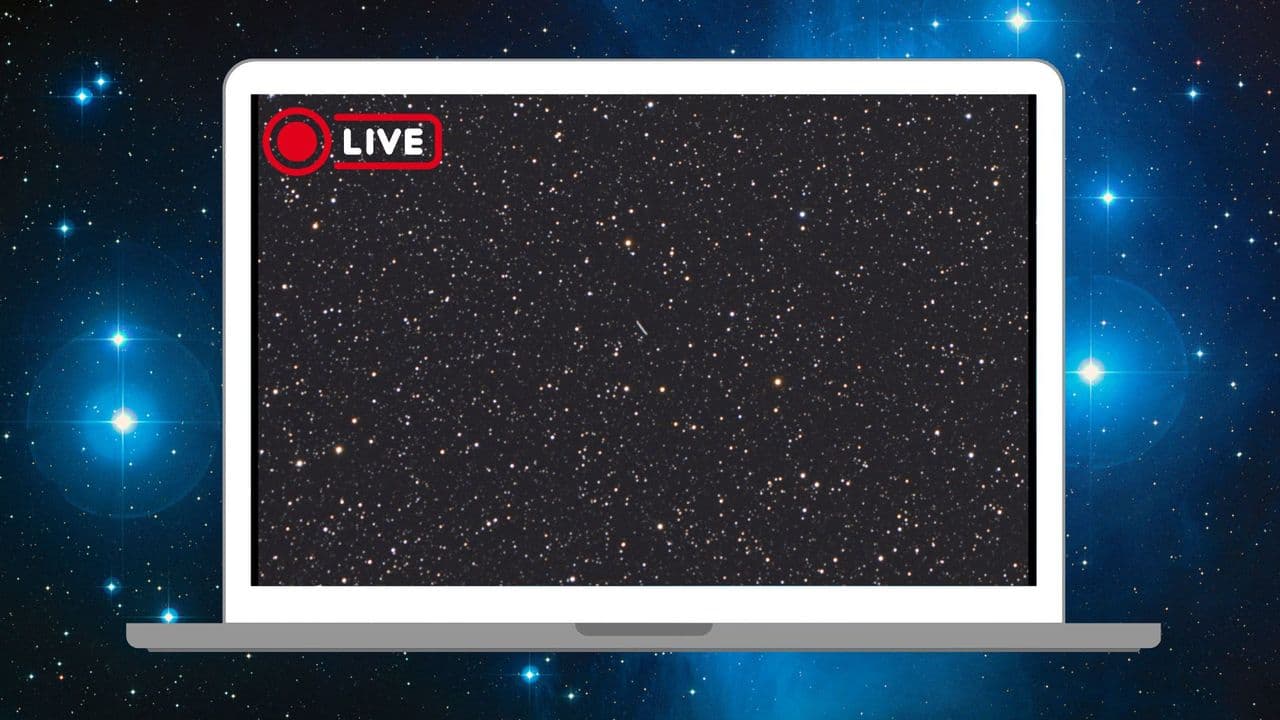
Potentially Hazardous Asteroid (152637) 1997 NC1 close encounter: online observation – 26 June 2026 - YouTube Watch On A giant asteroid roughly the size of a skyscraper will pass within seven lunar distances of Earth on June 27. Here's how to watch the rare flyby during two livestreams on June 26 and June 27.How can I watch the flyby online?The Virtual Telescope Project will host two YouTube livestreams starting at 7 p.m. EDT (2300 GMT) on June 26 and 27, before and after asteroid 1997 NC1's closest approach to Earth. Each event will feature live views of the asteroid captured by a suite of robotic telescopes in Manciano, Italy, weather permitting."While this encounter is absolutely no cause for concern, it will be a very important and interesting opportunity," Virtual Telescope Project founder Gianluca Masi said in a press release sent to Space.com. "An asteroid of this size comes this close roughly once every ten years, becoming bright enough to be easily visible through small telescopes while it crosses the starry sky."The asteroid designated 152637 1997 NC1 will make its closest approach to Earth at 7:16 a.m. EDT (1116 GMT) on June 27, when it will pass 1,594,339 miles (2,565,839 kilometers) from our planet, whipping by at 19,879 mph (31,992 km/h), according to NASA.With an estimated diameter of 1,443 feet (440 meters), 1997 NC1's size and potential to pass close to Earth during future orbits have led to it being designated as a potentially hazardous asteroid by NASA. However, it will pose zero risk to our planet, or the moon during this week's flyby.How can I see 1997 NC1 with my own telescope?A pair of 10x50 binoculars or a small 4-inch telescope should be enough to reveal the asteroid as a point of light shifting through the stars of the constellation Ophiuchus on the night of the close approach, according to Masi. Here's how to find the asetroid 1997 NC1 in the southern sky. (m. EDT on June 27 (0000 GMT on June 28), marking an ideal time to observe the wandering asteroid. Magnitude is the scale used by astronomers to measure the apparent brightness of an object in the night sky. The lower the number, the brighter the object!The streams will occur shortly before World Asteroid Day — an annual United Nations-backed event held on June 30 to raise awareness of the threat posed by potential asteroid strikes. The date was chosen to coincide with the anniversary of the Tunguska impact of 1908, when an asteroid exploded over Siberia, flattening millions of trees in an 830 square mile (2,148 sq km) area.
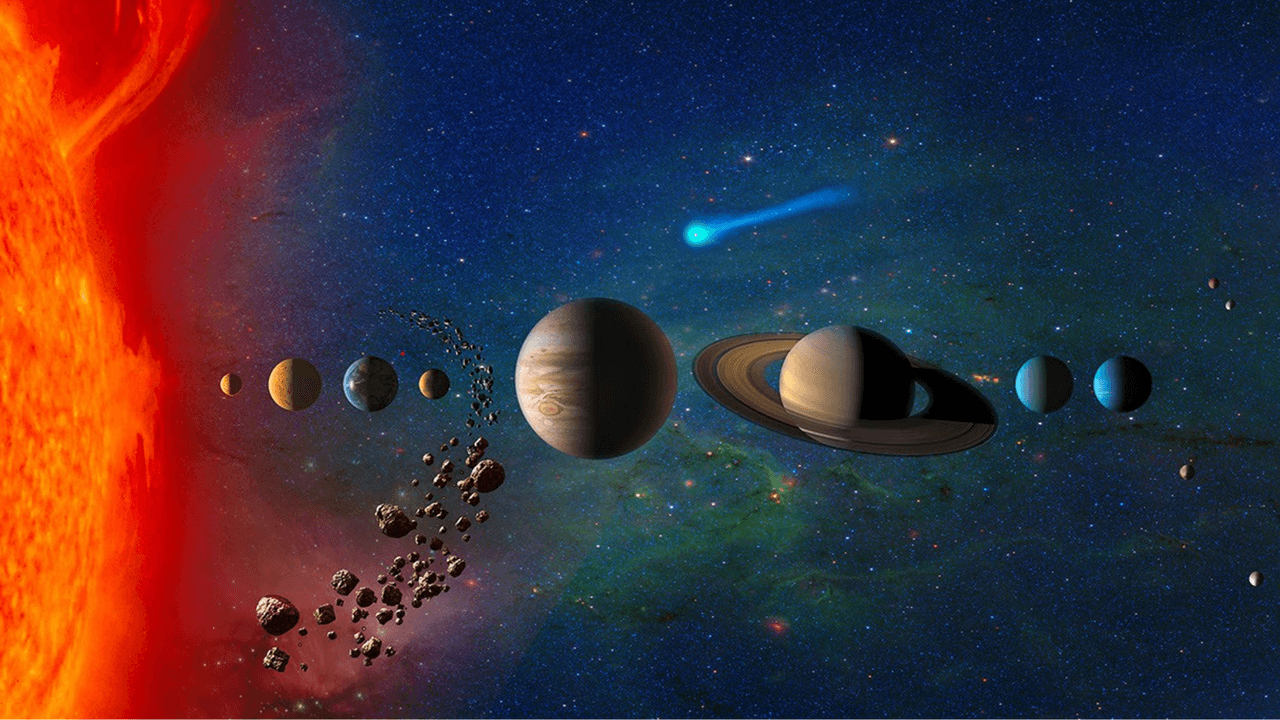
An illustration of our solar system. The asteroid belt is located between Mars and Jupiter, separating our system into what we refer to as the inner and outer regions. (To figure out why we’re all here, and whether anyone else might be out there in the universe, scientists have to start with a more basic question: how did Earth get its supply of the chemicals that make up living cells? According to Rice University planetary scientist Rajdeep Dasgupta and his colleagues, Earth’s stockpile of phosphorus and nitrogen, two chemical elements essential to life, came mostly from chunks of rock that formed in the inner solar system. And that process might not have happened without Jupiter looming just outside the asteroid belt."For our own solar system, Jupiter's presence and growth history indeed seem to have played a critical role in determining the distribution of the basic chemical ingredients necessary for habitable worlds," said Dasgupta in a NASA press release. "It remains an open question whether a life-essential elements budget similar to Earth's can be estimated without a Jupiter-like planet in the population."Jupiter scores an assistDasgupta and his colleagues combined lab experiments and computer simulations to map the proportions of nitrogen and phosphorus, two chemical elements essential to life, in the early solar system. Life as we know it is literally built on these two elements; you can't build amino acids without nitrogen, and you can’t build DNA or RNA without phosphorus.Other elements are also essential: carbon, hydrogen, oxygen, and sulfur, but how Earth got its phosphorus, in particular, has gotten less attention from researchers so far.When scientists are investigating how Earth might have received the ingredients for life, one big clue is the ratio of each element to the others. Those proportions can form sort of a chemical fingerprint pointing back to the elements’ original source. In this case, looking at the ratio of phosphorus to nitrogen in present-day Earth’s rocky bulk could shed some light on where Earth’s phosphorus came from.In the lab, the researchers simulated how different elements sort into layers as a newly formed asteroid cools, causing molten rock to crystallize. They also used computer simulations to model how different groups of planetesimals, clumps of metal and rock that coalesced out of the swirling disk of dust around the newborn sun, became the seeds of potential planets, formed and moved around the early solar system – moving phosphorus and nitrogen with them. (3 to 4.2 million years ago.Dasgupta and his colleagues’ models suggest that these chunks of rock, part of our solar system’s second generation of planetesimals, probably brought their shares of phosphorus and nitrogen to Earth as our planet was still forming. In a lot of cases, Earth’s gravity probably captured these objects and pulled them in, adding them to its growing bulk. Others got flung toward the accreting planet by collisions or close encounters with other objects, and Jupiter played a key role in that process. The gas giant Jupiter is pictured against a black background in an image captured by the Hubble Space Telescope. ( Before Jupiter loomed onto the scene, material in the disk tended to flow outward, c

A former Paralympic athlete could end up breaking some records in the final frontier.The U.K. government and the California company Vast have signed an agreement that aims to get John McFall, a reserve astronaut with the European Space Agency (ESA), on a research mission aboard Vast's Haven-1 space station.McFall, 45, is a surgeon with the United Kingdom's National Health Service who lost his right leg in a motorcycle accident when he was 19. He won a bronze medal in the 100-meter dash at the 2008 Paralympic Games in Beijing.Vast is developing a line of Haven outposts, and Haven-1 is set to be the first in low Earth orbit (LEO). It will launch aboard a SpaceX Falcon 9 rocket as soon as next year.The newly signed memorandum of understanding is not a guarantee that McFall will fly to Haven-1. Rather, it "will see the U.K. Space Agency support Vast to secure sponsorships to fund a spaceflight for John," U.K. officials wrote in a June 2 statement announcing the agreement.If McFall does indeed get to fly, he will work on research related to physiology, as well as prosthetics and movement in space. The U.K. government noted that his work could directly benefit millions of people, and also further ESA's goal of expanding access to space, as well as Europe's role in enabling private interests to work in LEO."The findings could have significant benefits for disabled people here on Earth, such as the design of lighter, more adaptable prosthetics on Earth," U.K. officials wrote in the statement. "They could also deepen our understanding of conditions like osteoporosis or muscle wastage that affect many disabled people and provide new insights into rehabilitation techniques for amputees.""Signing this agreement with Vast is incredibly exciting," McFall said in the announcement. "If we can make this mission happen, it won't just be a milestone for human spaceflight, it will send a powerful message about what people with disabilities are capable of, and that there should be no limit to what you can achieve — on Earth or in space."U.K. Space Minister Liz Lloyd said that McFall's history of accomplishments in sports, medicine and science show his extraordinary determination."The UK is committed to being at the forefront of inclusive human spaceflight," Lloyd said in the same announcement. "This builds on the groundbreaking work John has already done and opens the door to a genuine flight opportunity. I look forward to seeing what we can achieve together."Vast also made some other news recently: The company signed a two-mission deal with the government of France, to fly one French astronaut to the ISS and another to Haven-1.

("It's like you have a natural diesel engine in the deep atmosphere of a planet," lead author of a study about this research, Jeehyun Yang of the University of Chicago, said in a statement.Yang did his Ph.D. in chemical engineering, studying the exhausts of combustion engines before transitioning to study the chemistry of exoplanet atmospheres. The exhaust fumes of diesel engines are filled with black smoke made up of honeycomb-shaped particles called PAHs — polycyclic aromatic hydrocarbons. PAHs are among the most common carbon-based compounds in the cosmos, and are frequently produced whenever we burn something. (That black char on your burned toast? That's made of PAHs too.)When it comes to chemistry, some exoplanet atmospheres are more enigmatic. Take the mini-Neptunes — worlds in the size range between Earth and Neptune that are found orbiting close to their star. Despite their being the most common type of exoplanet found so far, debate continues to rage over the nature of these mid-size worlds. Are they miniature versions of hydrogen-rich gas giants like Jupiter? Are they literally smaller versions of Neptune and Uranus, rich in volatiles such as water? Or could they be habitable hycean worlds, with a dense atmosphere of hydrogen concealing a global ocean?Nobody knows for sure, and their characteristics could be varied enough that all three may apply. What is agreed upon, however, is that the mini-Neptunes did not form as close to their star as they are seen now; instead they formed farther out before migrating in. If we could answer how far out they formed, it could tell us what kind of world they are likely to be.Unfortunately, probing the chemistry of these worlds' atmospheres doesn't help much, because these atmospheres seem to be opaque, hiding the true composition of the planets. Scientific consensus is that this opaqueness is caused by hazy banks of clouds that are masking the atmospheres, but what kind of aerosol particles are in the clouds?When Yang saw the featureless spectra that the James Webb Space Telescope (JWST) was producing whenever it looked at a mini-Neptune, he noticed a distinct curve in the data that he recognized instantly as like the curve seen in the spectra of soot from a combustion engine.PAHs can form when carbon, hydrogen and oxygen react at high temperatures, often combined with high pressure, just like the conditions deep in the atmosphere of some mini-Neptunes. Yang suspects that the same reactions that take place in a combustion engine could be occurring naturally within certain mini-Neptunes, producing PAHS that amalgamate as clouds of soot that then rise higher into the atmosphere, perhaps driven upwards by thermal convection currents. What we would then see as an opaque atmosphere would in actual fact be hazy, planet-spanning clouds of soot.While the soot would explain why the JWST sees featureless spectra, it could also help solve a much more profound mystery: where did mini-Neptunes form and migrate in from? An artist's impression of a mini-Neptune. ( Player (STScI))Planets form in disks of gas and dust whose properties vary with distance from their central star. Take our solar system for instance. Heavier metallic and silicate materials were found in the disk closer to the Sun, while lighter gases and frozen volatiles such as water-ice and carbon dioxide-ice were found farther out, and this is replicated in the inner planets being rocky, Jupiter and Saturn being formed of the light gases hydrogen and helium, and Uranus and Neptune being rich in frozen volatiles.Determining the ratio of carbon to oxygen in a mini-Neptune's soot could act as a measure of how far out from their star they formed, and therefore what their bulk properties are likely to be. We'd finally be able to differentiat
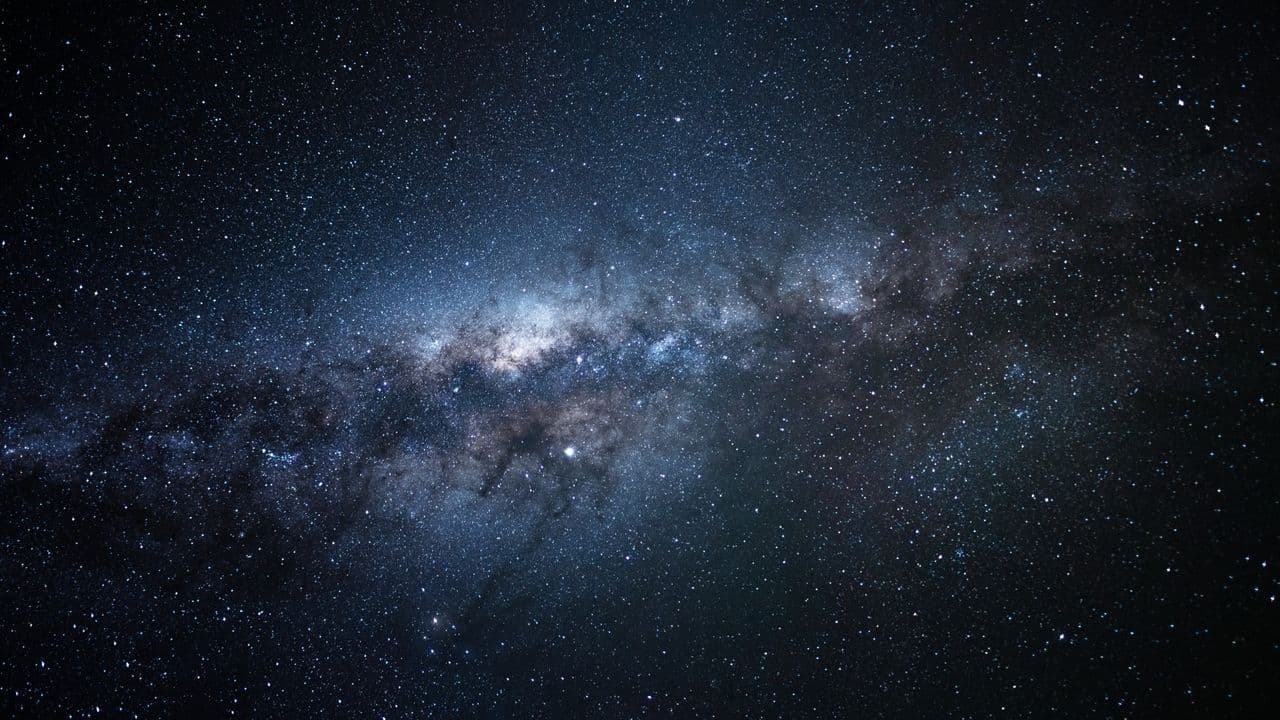
One of the arms of the Milky Way Galaxy seen from Patagonia, Argentina. ( The Milky Way was formed gradually, as smaller galaxies, or dwarf galaxies, were subsumed into our own galaxy over billions of years.It turns out that the stars leftover from these dwarf galaxies still share characteristics, and scientists are getting better at identifying them. By studying their similarities, scientists use these stars to determine their galaxies of origin. A team of astronomers say that they have identified a sample of these 20 stars that — due to their similar features — may have grown up together in a dwarf galaxy which the researchers have dubbed "Loki.""We might have detected one of the various small systems that contributed to form our Milky Way," astronomer Federico Sestito, a postdoctoral fellow at University of Hertfordshire and study coauthor, told Space.com via email.The study, published in the Monthly Notices of the Royal Astronomical Society, builds on previous work from Sestitio. He had already identified the stars that they ended up surveying for the new study. But now, Sestitio and the team have new features that they can use to identify stars' original galaxies."This work can be thought of as a sort of follow-up of previous works," Sestitio said. "In the past, we had to look at these old stars with peculiar motion; however, we lacked chemical information, which is now available with this work."Growing up togetherHelium and hydrogen were main ingredients for the early stars that were formed in our universe. Once formed, the stars fused these two elements together, which created heavier elements that made later generations of stars. This process happened again and again over many generations.Those early stars are considered "metal-poor." Because they formed so early, the stars only have traces of the heavier elements, like iron. Being metal-poor is one of the identifiers the scientists used to figure out which stars formed in the same dwarf galaxy."We think these old and metal-poor stars were formed in one small galaxy that was ingested by the forming Milky Way," Sestitio says.But it's not just that these 20 stars are metal-poor; scientists have identified many stars in our galaxy that share this feature. The stars' elemental makeup isn't sufficient for determining the galaxy. To narrow it down, the team considered other features like location and orbit."[The stars] orbital motion is peculiar as they are confined close to the Milky Way disc, which is usually populated by younger and metal-rich stars," Sestitio says.The Milky Way disc is the circular flowing whirlpool-like structure, where most of our galaxy's stars, including our own sun, are located. The 20 stars' unique positioning was another indication that they might all be related."This was possible thanks to precise orbital motion and chemical information of metal-poor and old stars," Sestitio says.While the orbital motion of these stars has been previously identified and studied, the chemical information is new, and it gave the researchers a much stronger indication for the stars' shared galaxy of origin. Artist's conception of the Milky Way galaxy. ( Hurt)Chemically uniqueThe features that the team needed to study were diverse, so they used a patchwork of methods."I think my favorite part of this research is having put together various techniques and methodologies to better understand the origin of these stars," Sestitio said.The astronomers used high-resolution spectroscopy, orbital motion, and even theoretical simulations to interpret the stars' chemical and orbital characteristics."We are providing a complete picture, as much as we can, of the properties of these stars," Sestitio said.The team compared the chemical properties in the stars to those of stars in the galactic halo, dwarf galaxies, as well as simulated populat
Discussion (0)