
Loading dispatches...
← Return to NewsroomScience
'This is actually taking a page out of the Communist Party playbook': New White House proposal could deny scientists funding based on their political opinions
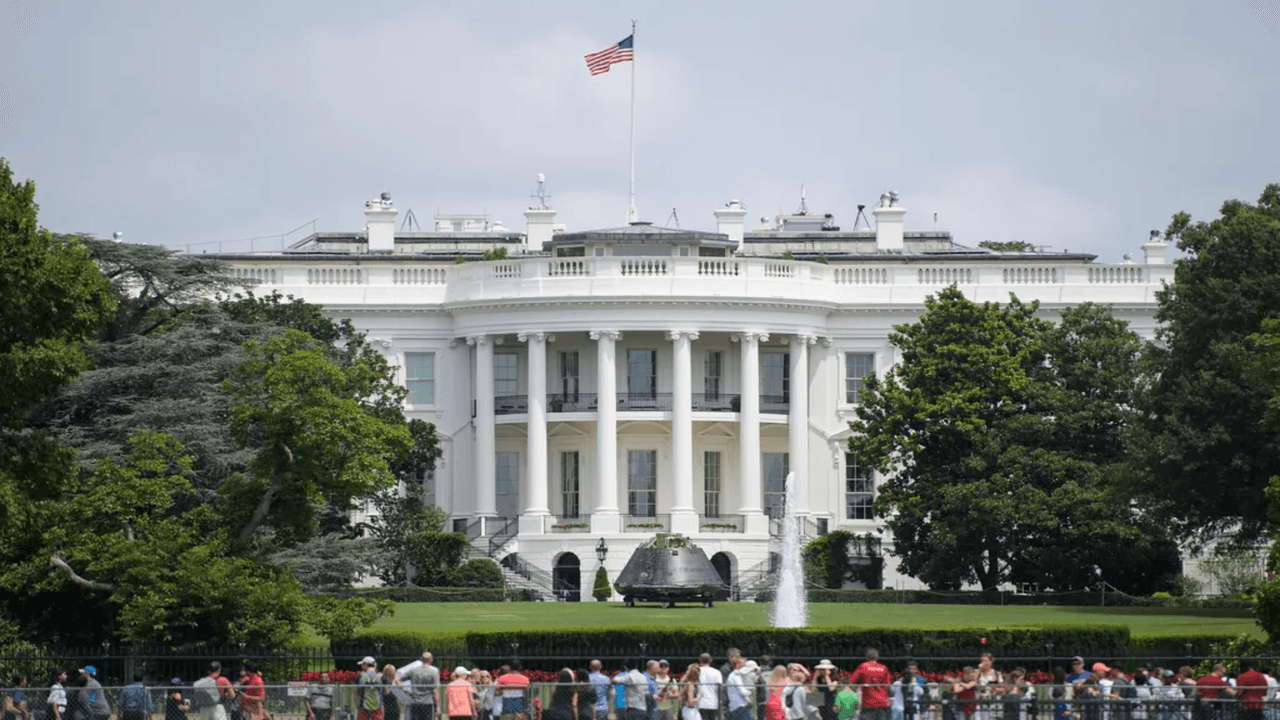
The Trump administration is suggesting handing all U.S. science policy decisions to political appointees. (S. which, if passed, could make science funding dependent on the whims of political appointees.The Office of Management and Budget (OMB) proposed a new rule called "Guidance for Federal Financial Assistance" on May 28. This rule would give political appointees the power to change, limit, or even fully overturn support and funding for scientific grants. Not only would political appointees have authority over science funding — and therefore the science that gets done — but the decisions they make could also depend on whether scientists' social media and personal lives align with the values of the current political party.To clarify, political appointees are government employees who are given those positions by elected officials. Their position is not dependent on educational background, expertise, or experience. "This is an insidious set of proposals put forward through the most dry and uninteresting sounding processes that you can imagine," Casey Dreier, Chief of Space Policy at The Planetary Society, told Space.com.Breaking it down: What is being proposed? And what does it mean?If finalized, this proposed rule would allow political appointees the power to change science funding no matter what has been decided through the traditional peer review scientific process. The rule states that scientific peer review "remains advisory and does not replace agency discretion.""You replace merit review, peer review, with partisan political review," Dreier said.What this means is the appointees could make the choice to go against peer review decisions based on their evaluation of the science itself — as well as whether or not they think that the personal lives of the scientists involved are aligned with the current political party."If you are part of a peaceful protest, if you post something on social media saying you disagree with the policy of the administration," Dreier said, that "can be actually used against you. [They can] just quietly deny you, your graduate students, [or] your staff access to scientific research money that you otherwise would have earned by merit."And while this rule is being proposed by the current Trump administration, Dreier warns that even those who align with the current political party in charge should be concerned."Even if you are sympathetic to the political perspectives at play here, you are giving and centralizing control ... you are opening up for a future Democratic administration to impose their partisan tests on what gets funded and not," Dreier said. "You're handing [over] incredible amounts of centralized control and restrictions on free speech, free associations, [and] free inquiry."While we have not seen attempted control over science funding in the U.S. like this before, Dreier draws a direct parallel to political decisions in China: "For an administration that says it wants to compete with China, this is actually taking a page out of the Communist Party playbook and saying, 'what if we actually impose a partisan political test on these things?'"And this rule wouldn't just grant political appointees this power — it would also make it mandatory that every grant is reviewed by a political appointee. Furthermore, the rule would build on a 2025 executive order that ordered federal agencies to award grants that "advance the President's policy priorities."It would also mean scientists working at federal agencies like NASA wouldn't be able to use funding to publish their science in journals or in open access publications, and forbids scientists from participating in professional scientific societies if those organizations do what could be seen as "issue advocacy," Dreier says.So, why is this happening? According to the proposed rule, this is a response to a lack of "transparency, acco
Closely spaced volcanic plumes, surrounded by clouds, stream from a growing underwater volcanic platform in this natural-color image captured by the OLI (Operational Land Imager) on Landsat 9 on May 11, 2026, three days after the eruption began. () In early May, NASA satellites imaged an underwater volcanic eruption in the Bismarck Sea off the coast of Papua New Guinea. But when volcanologists looked to study the event, they reached a frustrating wall. There are no high-resolution maps of the seafloor here.That lack of baseline data made it more difficult for scientists to determine exactly how the eruption reshaped the seafloor or how large the volcanic structure may be. In fact, they aren't even sure which geological feature even erupted. Current theories suggest the eruption likely occurred along the Titan Ridge, about 10 miles (16 kilometers) southeast of a 1972 submarine eruption site."The good news is that there are huge opportunities to explore and learn using both government and commercial satellite platforms already in orbit," Jim Garvin, the chief scientist at NASA's Goddard Space Flight Center, said in a statement.Existing satellite imagery allows scientists to analyze the miles-high ash plume, discoloration in the ocean water, rafts of the volcanic rock pumice emanating from the event, and even thermal events captured by the Visible Infrared Imaging Radiometer Suite (VIIRS) on NASA's Suomi NPP satellite."There must be a lot of hot material near the surface to generate so many thermal anomalies," Simon Carn, a volcanologist at Michigan Tech, said in the statement. "This suggests a fairly shallow eruption vent — much shallower than what's implied by the existing bathymetry, which shows water depths of several hundred meters or more."Now, researchers are waiting to see if a new island will be born out of the eruption, which Garvin points out is something we've rarely observed via satellite in real-time. It would likely take some time for one to form, and it's unclear how long this eruption might last. The nearby 1972 eruption, for instance, lasted four days, whereas another nearby eruption in 1957 lasted just short of four years. Floating pumice and green, discolored water extend southwest from the eruption site as a white volcanic plume drifts west overhead in this image acquired by the MODIS (Moderate Resolution Imaging Spectroradiometer) on NASA's Terra satellite on May 15, 2026. ( "This new eruption could present an even better opportunity for 'island-naut' exploration as we prepare to return to the moon with women and men via Artemis IV," said Garvin. With this, Garvin is referring to how researchers could study the budding island and test out how it responds to different weather events and introduction of some animal species — and even the humans themselves. Could the results from such studies inform how future astronauts attempt to create settlements on the moon and Mars someday?Maybe so. But either way, we can be certain the discussion prompted by this satellite footage proves one common truism in oceanography: We know far more about the surface of the moon than the deep-ocean floor. Space.com contributing writer Stefanie Waldek is a self-taught space nerd and aviation geek who is passionate about all things spaceflight and astronomy. With a background in travel and design journalism, as well as a Bachelor of Arts degree from New York University, she specializes in the budding space tourism industry and Earth-based astrotourism. In her free time, you can find her watching rocket launches or looking up at the stars, wondering what is out there. Learn more about her work at www.stefaniewaldek.com.

Discussion (0)