
Loading dispatches...
← Return to NewsroomScience
Annular solar eclipse 2027: everything you need to know about the 'ring of fire' on Feb. 6
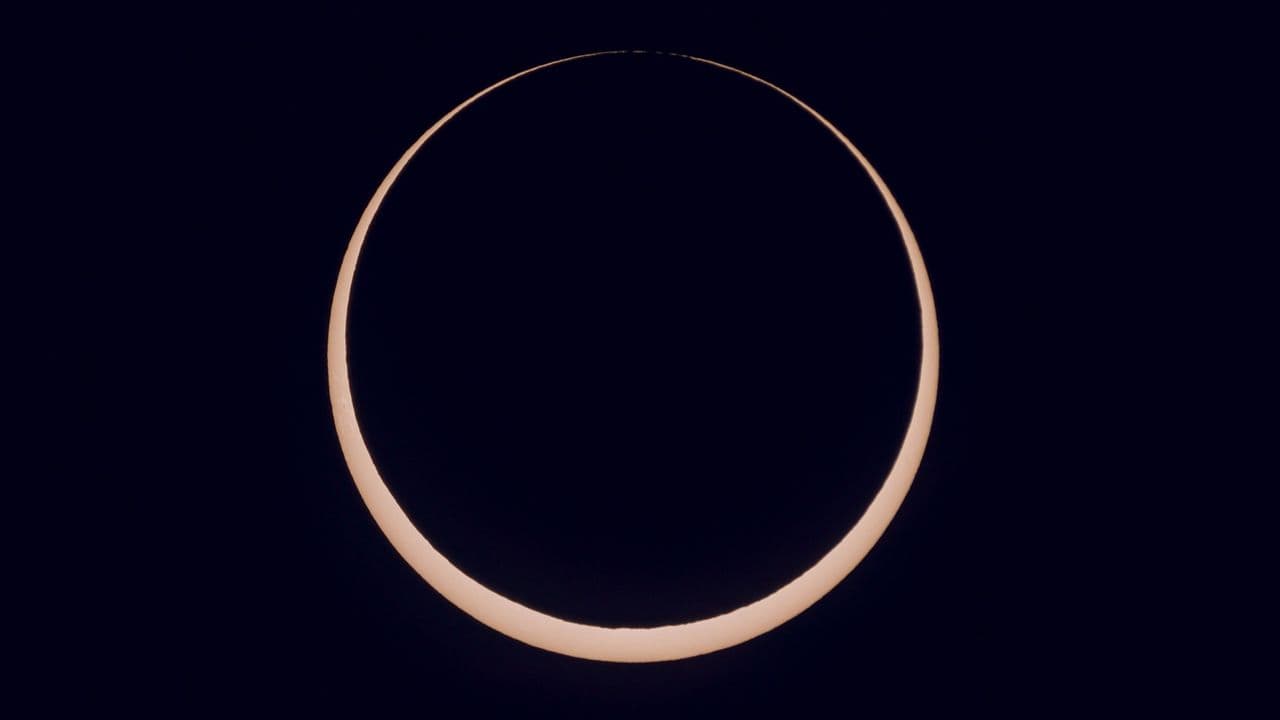
Chile, Argentina and parts of Africa will see a long 'ring of fire' during the annular solar eclipse on Feb. 6, 2027. ( 6, 2027, when the moon's cone-shaped central shadow will not quite reach Earth. The result will be a 'ring of fire' visible to those within a broad path across southern Chile, Argentina and coastal parts of West Africa.At the point of greatest eclipse in the Pacific, the moon will cover 93% of the sun's disk, leaving a relatively large bright ring visible for 7 minutes and 51 seconds. That makes it one of the longest annular solar eclipses this decade.During an annular solar eclipse, it is NEVER safe to look directly at the sun without solar eclipse glasses designed for solar viewing. Read our guide on how to observe the sun safely.This annular solar eclipse has a long and broad path, rising southwest of Easter Island (Rapa Nui) in the south Pacific Ocean and setting in the Gulf of Guinea, West Africa. The global path of the 'ring of fire' annular solar eclipse on Feb. 6, 2027. (net. Source: Esri, Maxar, GeoEye, Earthstar Geographics, CNES/Airbus DS, USDA, USGS, AeroGRID, IGN, and the GIS User Community. Eclipse path from Xavier Jubier.))That journey is 9,011 miles (14,501 kilometers), with the path between 180-220 miles (289-355 km) wide. The path of annularity crosses southern parts of Chile, Argentina, Uruguay and (a tiny sliver of) Brazil in South America. After crossing the Atlantic, the northern edge of the path just makes land in the Côte d'Ivoire, Ghana, Togo, Benin and Nigeria.The Path of Annularity: South AmericaEclipse chasers wanting to observe annularity high in the sky while on land should head to Chile or Argentina, with the latter having a better chance of a clear sky. The path crosses northern Patagonia, a region of wide skies, low population, and — crucially in February — a generally favorable climate. The path of the 'ring of fire' annular solar eclipse through South America on Feb. 6, 2027. (net. Source: Esri, Maxar, GeoEye, Earthstar Geographics, CNES/Airbus DS, USDA, USGS, AeroGRID, IGN, and the GIS User Community. Eclipse path from Xavier Jubier.)As it reaches Chile's Pacific coast, the "ring of fire" will sit around 50° above the northeast, but this region of mountains and fjords is both logistically challenging and likely cloudy. Average February cloud cover along the centerline in Chile is typically around 65%, while just across the mountains in a classic rain-shadow zone in Argentina's Patagonian plains, cloud cover drops to as low as 30%, according to meteorologist Jay Anderson on Eclipsophile.com.Standout locations in the rain-shadow include El Maitén (which is being favored by eclipse tour groups), Esquel and Trevelin, where annularity occurs just before midday. There's a similarly small chance of cloud on Argentina's Atlantic coast, with potential observing locations including Las Grutas on the San Matias Gulf and, south of Buenos Aires, the lush Laguna La Brava.Although the path brushes Uruguay (just missing Montevideo), and nicks Brazil (just missing Rio de Janeiro), once the centerline of the path of annularity leaves Argentina, it doesn't make landfall again.The Path of Annularity: Africa The path of the 'ring of fire' annular solar eclipse in the Gulf of Guinea, West Africa, on Feb. 6, 2027. (net. Source: Esri, Maxar, GeoEye, Earthstar Geographics, CNES/Airbus DS, USDA, USGS, AeroGRID, IGN, and the GIS User Community. Eclipse path from Xavier Jubier.)After crossing the South Atlantic, the path of annularity makes its final landfall in West Africa, reaching Côte d'Ivoire, Ghana, Togo, Benin and Nigeria.Here, the eclipse unfolds late in the day, with the "ring of fire" hanging lo
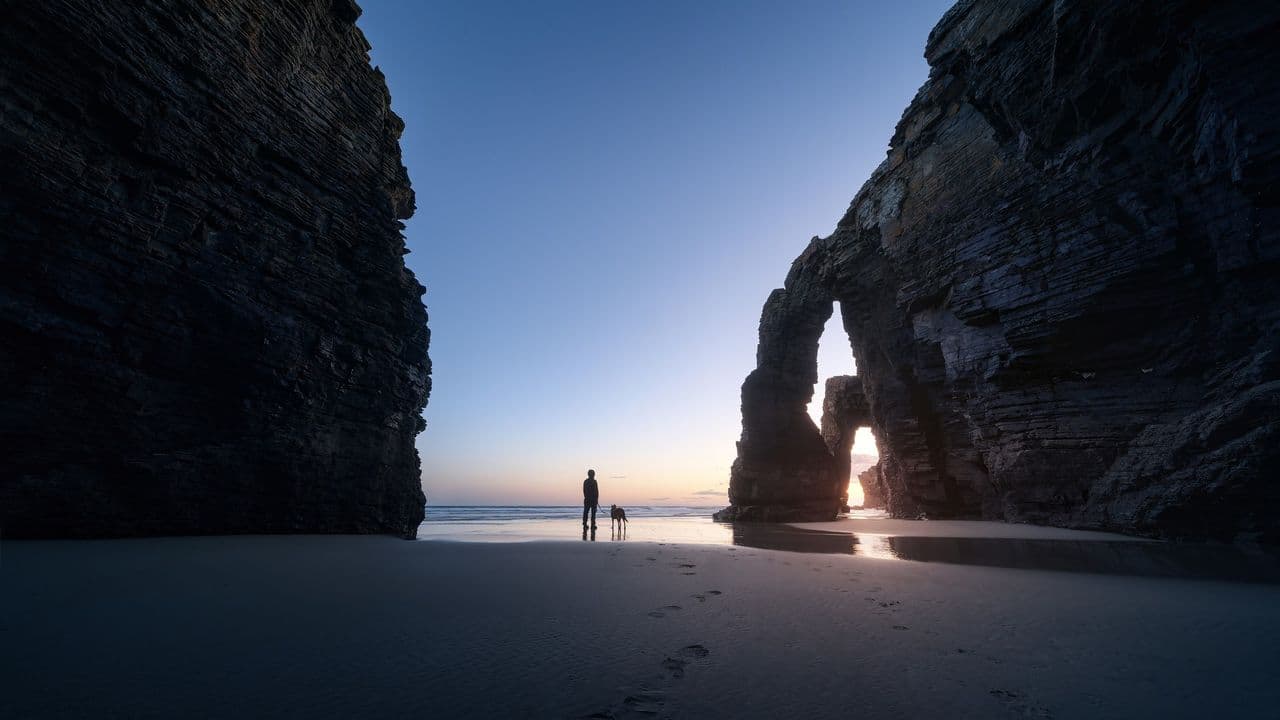
Playa de las Catedrales, a landmark beach in Galicia, Spain will experience the total solar eclipse on Aug. 12, 2026. ( For the Aug. 12, 2026, total solar eclipse, Spain's beaches will be among the most sought-after locations — but not all will deliver. The path of totality crosses the north and east of the country just before sunset, with the sun low in the west-northwest. Many top resorts face east for sunrise views, so at the crucial moment, the sun may be blocked by hotels or terrain behind you.To experience totality — the brief period during a solar eclipse when the sun is completely covered by the moon — clearly, being on the coast isn't enough — you need a clear, unobstructed view to the west-northwest, ideally over open water. That's why the best eclipse beaches are either on Spain's Atlantic-facing north coast, where the horizon is open, or in carefully chosen Mediterranean spots where development is low, and sightlines are clean.The altitude of the eclipsed sun matters: in Galicia, Asturias, and the Cantabrian Coast, it's 12 to 9 degrees above the horizon — manageable but low. On the Mediterranean and Balearic Islands, it's just 4 to 2 degrees, turning totality into a fleeting event easily obscured by haze or thin cloud.Choose your beach wisely (checking tide times a few weeks in advance on Surf Forecast or Tide Forecast), and you'll watch the moon's shadow race in from the Atlantic before revealing the corona during totality, just minutes before sunset.Get it wrong, and you could miss everything.Essential resources for checking and re-checking intended destinations for totality include Xavier Jubier's Interactive Google Map, which has timings and built-in sightlines from Peak Finder, as well as The Eclipse App, Eclipse Horizon Checker and the Instituto Geográfico Nacional. The best advice is to test your location the day before the eclipse. Let's look at some of the best beaches in Spain for eclipse viewing, complete with details on timing and conditions.1. Praia de Alba e Sabón, GaliciaLocation: Praia de Alba, Municipality of Arteixo, Galicia, SpainTime and duration of totality: 8:27 p.m. CEST; 1 minute, 9 secondsHeight of eclipsed sun above west-northwest: 12.1 degreesChance of clouds: 54% (since 2000)Easily accessible just south of A Coruña, this broad, open beach offers excellent infrastructure and long, flat stretches of sand. Its clear west-northwest outlook makes it ideal for a low, pre-sunset eclipse, with uninterrupted ocean horizons, coastal paths, and easy access.2. Playa de Langre, CantabriaLocation: Cantabric coast, SpainTime and duration of totality: 8:26 p.m. CEST; 1 minute, 55 secondsHeight of eclipsed sun above west-northwest: 9 degreesChance of clouds: 56% (since 2000)A wild, cliff-backed beach east of Santander, Langre offers a dramatic natural amphitheater facing west-northwest. Wide sands and elevated viewpoints above the cliffs provide excellent sightlines for a low eclipse. Access requires a short walk, but an expansive horizon and striking scenery are the reward.3. Playa de las Catedrales, Galicia Playa de las Catedrales (As Catedrais beach) in Galicia. (m. CEST; 1 minute, 48 secondsHeight of eclipsed sun above west-northwest: 11 degreesChance of clouds: 61% (since 2000)Famed for its towering rock arches, this dramatic beach offers a spectacular setting — but requires planning. Strict visitor limits and tides complicate access, so consider the clifftop gardens above for an easier option. Both provide wide northwest views, ideal for watching the eclipsed sun sink toward the Atlantic horizon.4. Playa El Puntal de Somo, CantabriaLocation: Calle El Puntal, Santander, SpainTime and duration of totality: 8:27 p.m. CEST; 56 secondsHeight of ecl

( Now, after three hits in collaboration with Games Workshop, studio Creative Assembly is embracing a grimdark futuristic setting with Total War: Warhammer 40,000.Warhammer 40K is the most famous miniature wargame in the world, with nearly 40 years of legacy behind it. In fact, the 11th edition of the game will be released in June 2026. There have been plenty of Warhammer 40K video games in that time, but nothing quite on the scale that 'Total War: Warhammer 40,000' promises.In the 41st millennium, the Imperium of Man is besieged by extraterrestrial forces of all sorts and even darker threats, but humanity's defenders are brutal and relentless, too. We covered the basics of the 40K universe while back, but all you really need to know is that 40K's future is defined by a mixture of sci-fi and dark fantasy, colloquelly know as "grimdark".Now that you're suitably prepared, scroll down and learn everything we know about Total War: Warhammer 40,000 so far (and we'll be keeping this page updated as new info drops).When is Total War: Warhammer 40,000 coming out? (With a late 2025 reveal during the Game Awards ceremony, publisher SEGA, developer Creative Assembly, and WH40K owner Games Workshop unleashed both striking CG cutscenes and in-game footage, but nothing we've heard suggests Total War: Warhammer 40K is anywhere near done.What platforms is Total War: Warhammer 40,000 launching on? (The Total War franchise had never escaped the confines of PC gaming, but that's about to change with the engine refresh that's powering Total War: Warhammer 40K, which was confirmed to be invading current-gen consoles day one as well.No doubt, this also means much of the user interface and the control scheme will have to be adapted to the limitations of gamepads, but we're confident Creative Assembly is building a flexible experience from the ground up for all platforms.Total War: Warhammer 40,000 trailers TOTAL WAR: WARHAMMER 40,000 | ANNOUNCE TRAILER - YouTube Watch On Two Total War: Warhammer 40K trailers have been released so far. The debut trailer shown at the 2025 Game Awards was meaty, showcasing CG cutscenes that perfectly set the dark epic atmosphere and gameplay clips that tease a new level of large-scale warfare across the stars.You can watch it above.We also got a shorter, CGI-only trailer at Skulls 2026, Games Workshop's annual video game-focused event. The trailer doesn't show much, as it's just a computer display playing an audio log, but the audio is very revealing. Total War: Warhammer 40K - Official Teaser Trailer | Warhammer Skulls 2026 - YouTube Watch On Commisar Yarrick's voice is unmistakable, and that means only one thing: Total War: Warhammer 40,000 is going to Armageddon. Armageddon is one of the most infamous planets in the 40K setting; the site of a never-ending war between the Imperium and the Orks.Warhammer 40K 11th Edition will be taking the narrative back to Armageddon for its launch in June. We can't wait to be back there, both on the tabletop and in Total War.What type of strategy game is Total War: Warhammer 40,000? ( On a basic level, it could be considered a blend of RTS and grand strategy, but the Total War franchise has evolved over the decades, almost becoming a unique strategy video game subgenre.Like in past Total War games, players must choose an army (and species in this case) and conquer a massive campaign map against a varying number of
The total solar eclipse on Aug. 12, 2026, can be enjoyed on many beaches in Spain, such as S'Arenal in Mallorca. ( 12, 2026, total solar eclipse, Spain's iconic holiday hubs will be buzzing, but many are outside the path of totality. If you're in the Costa Brava or Barcelona, you're in the danger zone of missing out. Barcelona will experience a 99% partial eclipse, which might sound impressive, but in practice it's no more interesting than a 10% eclipse; you miss the corona, the sudden darkness and the drop in temperature.In eclipse chasing, it's totality or bust — and that means getting in the path of totality, on the east coast of Spain, between Vilanova i la Geltrú in the north, close to Barcelona, and Cullera, just south of Valencia. Here, the eclipsed sun will be about four degrees above the west-northwest horizon, but most Mediterranean resorts face the water to the east, meaning the sun will be behind you, hidden by hotels or hills. To see the corona, you need an unobstructed northwest-facing view. Wide, flat areas like the Ebro Delta, high ground and well-positioned miradors are worth searching out. The same goes for the Balearic Islands, where a sunset eclipse — totality takes place barely 2 degrees above the horizon — can be enjoyed from west-facing beaches.Essential resources for checking and re-checking intended destinations for totality include Xavier Jubier's Interactive Google Map, which has timings and built-in sightlines from Peak Finder, as well as The Eclipse App, Eclipse Horizon Checker and the Instituto Geográfico Nacional. Do your research and, if you can, check the location the night before for a clear view of the sunset.1. Playa de Palma, Mallorca The S'Arenal end of Playa de Palma beach. (m. CEST; 1 minute, 36 secondsHeight of eclipsed sun above west-northwest: 2.4 degreesChance of clouds: 32% (since 2000, according to Timeanddate.com)It won't do to be in Palma de Mallorca, the island's capital, come totality. Escaping to the rugged west coast is one option, but another is to head down the coast to this long sandy beach resort stretching between Can Pastilla and S'Arenal. Its lively promenade will host a fine view of the eclipsed sun just before sunset, though avoid the first miles or so southeast of Can Pastilla, which will have obstructed sightlines.2. Playa de la Malvarrosa, Valencia Valencia's Malvarrosa beach. (gaul via Getty Images)Location: Valencia, SpainTime and duration of totality: 8:32 p.m. CEST; 1 minute, 3 secondsHeight of eclipsed sun above west-northwest: 4.4 degreesChance of clouds: 31% (since 2000)Just a stone's throw from the city center, Valencia's best-known beach has fine sand, a relaxed atmosphere and — if you're careful — clear sightlines to the eclipse. The port, at the south end of the beach, is also an option.3. La Muntanyeta dels Sants, ValenciaLocation: València, SpainTime and duration of totality: 8:33 p.m. CEST; 25 secondsHeight of eclipsed sun above west-northwest: 4.2 degreesChance of clouds: 28% (since 2000)Chasing such a short totality might seem crazy, but clear sightlines from the east coast are rare — and this location has everything. Inside Albufera Natural Park, this watchtower is a limestone promontory that gives views across paddy fields.4. Platja de Llevant, Salou Llevant golden sand beach in Salou. (m. CEST: 1 minute, 7 secondsHeight of eclipsed sun above west-northwest: 4 degreesChance of clouds: 35% (since 2000)A popular, family-friendly resort town on Spain's Costa Daurada (or Costa Dorada), Salou is close to the northern limit of the path of totality, but still has a reasonably long totality. It's known for its Llevant gol
Discussion (0)