
Loading dispatches...
← Return to NewsroomScience
The Unistellar Odyssey Pro helped me feel in touch with the universe and it's now 15% off
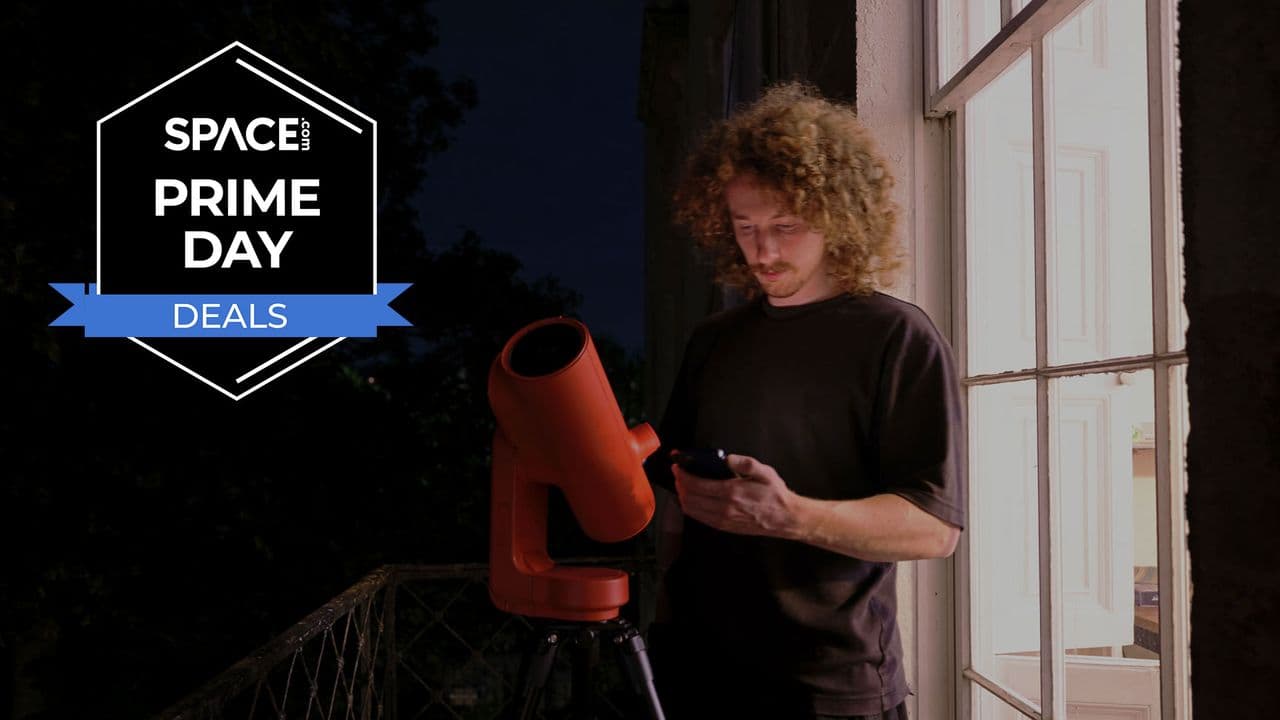
The Fujinon Techno-Stabi TS-L 1640 image-stabilized binoculars have some of the strongest image stabilization on the market. ( The Unistellar Odyssey Pro was the first smart telescope that I used and it helped me on my astrophotography journey, allowing me to quickly and easily take awe-inspiring images of deep space objects like the Great Pegasus star cluster and a range of galaxies. You can get the Unistellar Odyssey Pro smart telescope, on sale right now for $3,909 at Unistellar.Alongside the usual go-to technology present in all of Unistellar's smart telescopes, the Odyssey and Odyssey Pro models also have autofocus to help even more when imaging the night sky. With Amazon Prime Day well underway and running until June 26, keep an eye on the best prices across all skywatching gear on our Prime Day hub, which tracks deals from all major retailers.Harry joined Space.com in December 2024 as an e-commerce staff writer covering cameras, optics, and skywatching content. Based in the UK, Harry graduated in 2019 with a Bachelor's degree in American Literature with Creative Writing from the University of East Anglia. A keen photographer, Harry has strong experience with astrophotography and has captured celestial objects with a range of cameras and smart telescopes. We've got you covered with reviews and rankings of the best telescopes, binoculars, star projectors, cameras, drones, Lego, streaming and more.Image 1 of 15The Odyssey Pro features the same specs as the non-pro version apart from an upgraded 4.1MP sensor and Nikon-made eyepiece.( To start using it, all I had to do was set it up on a clear night and link it to my phone, before allowing the telescope to orient itself and choosing a target to observe. After that, I selected 'enhanced vision' mode, which stacks four second exposures on top of each other to build a stronger and more detailed image, something that makes details in galaxies stand out.It's definitely a model aimed at those who have very little experience with astronomy and astrophotography, as it not only finds your target, but it focuses on it, too. This is especially useful if you are not confident focusing on stars with a Bahtinov mask and getting them as sharp as possible.I have hands-on experience with the Pro version, which has a built-in eyepiece with a digital display, but the rendered image is the same as what you can see on your smart device. In all honesty, if you aren't bothered about having a "traditional telescope experience," skip the Pro model and grab the regular Odyssey for $2,209 to save an extra $1,000. For a range of other telescope models, cameras and skywatching gear, check out our Prime Day hub, which tracks all of the best deals amongst this year's summer sales.All of the Unistellar smart telescopes are great for assisted and easier stargazing, as they all have smooth go-to technology and astro capability. If you think that you may want more control over the focus in your astrophotography or if you want a higher resolution sensor, the eQuinox 2 and eVscope 2 are the company's pro lineup. With all of their models on sale for Father's Day, now is a good time to grab one. While there isn't as much darkness at the moment, they also all double up as solar telescopes with the purchase of a solar filter, something that may come in handy for the Aug. 12 total solar eclipse.Key features: Newtonian reflector optical design, 5-hour battery life, 4.1 MP Sony sensor, 3.3-inch (85 mm) aperture, 12.6-inch (320 mm) focal length, weight 8.8 lbs (4 kg), fully motorized alt-azimuth mount, 64 GB storage, Nikon-made eyepiece
Discussion (0)