
general
2updates
PM Modi disburses Rs 2,400 crore under employment scheme
PM Modi disburses Rs 2,400 crore under employment scheme Awaz The Voice
13 stories
PM Modi disburses Rs 2,400 crore under employment scheme Awaz The Voice

Municipal workers staging a protest outside the Kalaburagi City Corporation on Thursday. | Photo Credit: ARUN KULKARNI Hundreds of municipal workers under the banner of the Karnataka State Municipal Workers Union affiliated to Centre of Indian Trade Unions (CITU) staged a protest outside the Kalaburagi City Corporation on Thursday demanding regularisation of all municipal workers, implementation of equal pay for equal work, abolition of the contract labour system and provision of basic welfare facilities.The protesters submitted a memorandum addressed to the Chief Minister through the district administration and the Kalaburagi City Corporation raising a 16-point charter of demands concerning the welfare and service conditions of municipal workers.Addressing the gathering, union honorary president K. Neela said that the State government has, in 2016-17, decided to abolish the contract labour system and regularise sanitation workers.However, drivers, cleaners and sweepers in Kalaburagi continue to be engaged through contractors despite the government’s decision, she said.“Officials have promised us that the process of regularising workers currently under the direct payment system and bringing contract drivers, cleaners and sweepers under the direct payment system will be completed within a week. They have also assured us of implementing our remaining demands and preventing any form of harassment of civic workers. We expect the authorities to honour these commitments without delay, failing which the union will be compelled to intensify its agitation,” she said.The memorandum said that although 936 workers have been brought under the direct payment system in Kalaburagi, the process of granting them permanent worker status remained stalled. It said that sanitation workers, sewer workers, solid waste handlers, drivers, park workers, water supply staff and other municipal employees continue to work under difficult and unsafe conditions without adequate protective equipment and welfare facilities.Among the key demands are immediate regularisation of all contract, direct-payment and daily-wage municipal workers, abolition of the contract system, implementation of equal pay for equal work, payment of revised minimum wages with arrears, provision of safety gear, health insurance and accident insurance, prohibition of manual scavenging, special facilities for women workers, housing and educational assistance, pension benefits and recruitment of at least 1,000 additional civic workers to meet the growing needs of the city.The union also sought the immediate release of pending wages of drivers, loaders and sweepers and demanded that all forms of harassment of civic workers be stopped.CITU district president M.B. Sajjan, vice-president Nagappa Rayachurkar, Dalit Rights Committee president Sudham Dhanni, secretary Pandurang Mavinakar, Building Workers Union district president Shrimant Biradar, Janavadi Mahila Sanghatane State vice-president Meenakshi Bali, DYFI State president Lavitra, SFI leader Imamsab Nadaf, Pradeep and Tayanna, among others, extended support to the agitation. Published - June 18, 2026 07:58 pm IST
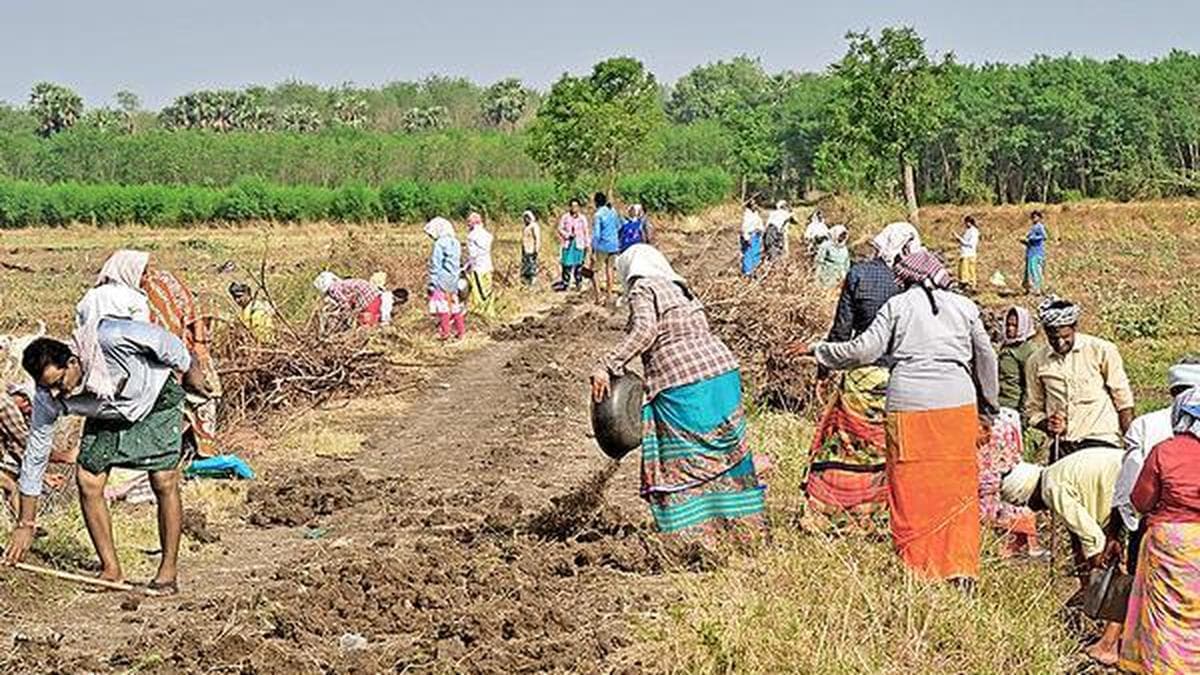
‘Without causing any inconvenience to workers, we are moving from MGNREGA to VB-GRAM G. There will not be a gap of even a single day in the availability of work,” says Shivraj Singh Chouhan. File | Photo Credit: The Hindu Union Rural Development Minister Shivraj Singh Chouhan on Tuesday (June 9, 2026) announced an interim allocation of ₹95,962 crore for the new rural employment scheme, the Vikshit Bharat Guarantee for Rozgar and Ajeevika Mission Gramin (VB-GRAM G). This sum does not include the State governments’ share. Most States will have to contribute an additional 40% of the sum allocated to them. The combined outlay for the scheme will be ₹1.25 lakh crore.Mr. Chouhan said that the allocation had been made even before notifying the scheme’s rules and framing the formula dictating distribution to different States, to ensure “a seamless transition” from the Mahatma Gandhi National Rural Employment Guarantee Scheme (MGNREGS). No State, he said, would face any reduction in funds.“Without causing any inconvenience to workers, we are moving from MGNREGA to VB-GRAM G. There will not be a gap of even a single day in the availability of work,” he said.Funding formulaAccording to the Rural Development Ministry, Uttar Pradesh has been allotted the highest interim allocation of ₹9,721.48 crore, followed by West Bengal (₹8,508 crore), Tamil Nadu (₹7,585.49 crore), Rajasthan (₹7,581.87 crore), Andhra Pradesh (₹7,707.21 crore) and Bihar (₹6,715.83 crore). The total allocation for States stands at ₹92,550.17 crore, while Union Territories have been allocated ₹1,291.52 crore. An additional ₹1,850.62 crore has been earmarked for central administration and social audits, taking the total to ₹95,692.31 crore.The allocation is largely in line with funds given to States under MGNREGS in previous financial years. The thrust of the new programme, however, is to ensure that the employment scheme has a wider presence in economically weaker States, as indicated by the proposal in the draft rules to use the 16th Finance Commission’s horizontal devolution formula to determine Central allocations to States. The final formula for distributing the funds, expected to be notified on July 1, could alter the future share of different States.Four States not readyMr. Chouhan also said that 26 States have completed the procedural requirements necessary to implement the new scheme, while four States — Jharkhand, Karnataka, Telangana, and Mizoram — are yet to complete all formalities. However, representatives of these States also attended the meeting and assured the Centre that they were preparing for implementation.Prior to the implementation of the VB-GRAM G scheme, States have to frame rules, complete e-KYC of beneficiaries, fix the blackout period according to their agricultural cycles, and carry out capacity-building exercises at the district and block levels.Despite a change in government in West Bengal, with the BJP now in power, the issue of settling pending dues under MGNREGS, worth ₹8,508 crore, continues to remain unresolved. “Till those disputes are settled, that question does not arise. For the remaining period, the West Bengal government has given in writing that it is ready to accept all the rules and conditions of the Central government,” Mr. Chouhan said. Published - June 09, 2026 08:02 pm IST

The Ministry of Fisheries, Animal Husbandry and Dairying has given administrative approval for ₹72.42 crore to complete the Ameenabad fishing harbour in Kakinada district under Pradhan Mantri Matsya Sampada Yojana (PMMSY).The harbour was designed to facilitate anchoring of 2,500 boats, with the annual handling of 1.10 lakh tonnes.In November, 2020, then Chief Minister Y.S. Jagan Mohan Reddy laid the foundation stone for the ₹350-crore harbour project that was to be funded by the Centre from the Fisheries and Aquaculture Infrastructure Development Fund and NABARD Infrastructure Development Assistance. In an official release, Kakinada City MLA Vanamadi Venkateswara Rao said that the Centre had granted administrative approval for ₹72.42 crore for the Ameenabad harbour.According to a letter dated June 5 to the Andhra Pradesh government, the Ministry of Fisheries, Animal Husbandry and Dairying has assured to explore the viability for funding for the Ameenabad harbour from the Ministry of Ports, Shipping and Waterways under the Sagarmala Scheme. The Hindu has a copy of the letter.The Centre will release its share of ₹43.45 crore through instalments as the Andhra Pradesh government requires to release its share.The quarantine facilities, laboratory, custom facilities, processing facilities and hinterland connectivity for domestic and international trade are among the facilities to be developed with the grant. Ministry of Fisheries, Animal Husbandry and Dairying has mandated to provide online auction facility, real-time information of catch and vessels and bio-security at the harbour. Published - June 06, 2026 08:53 pm IST
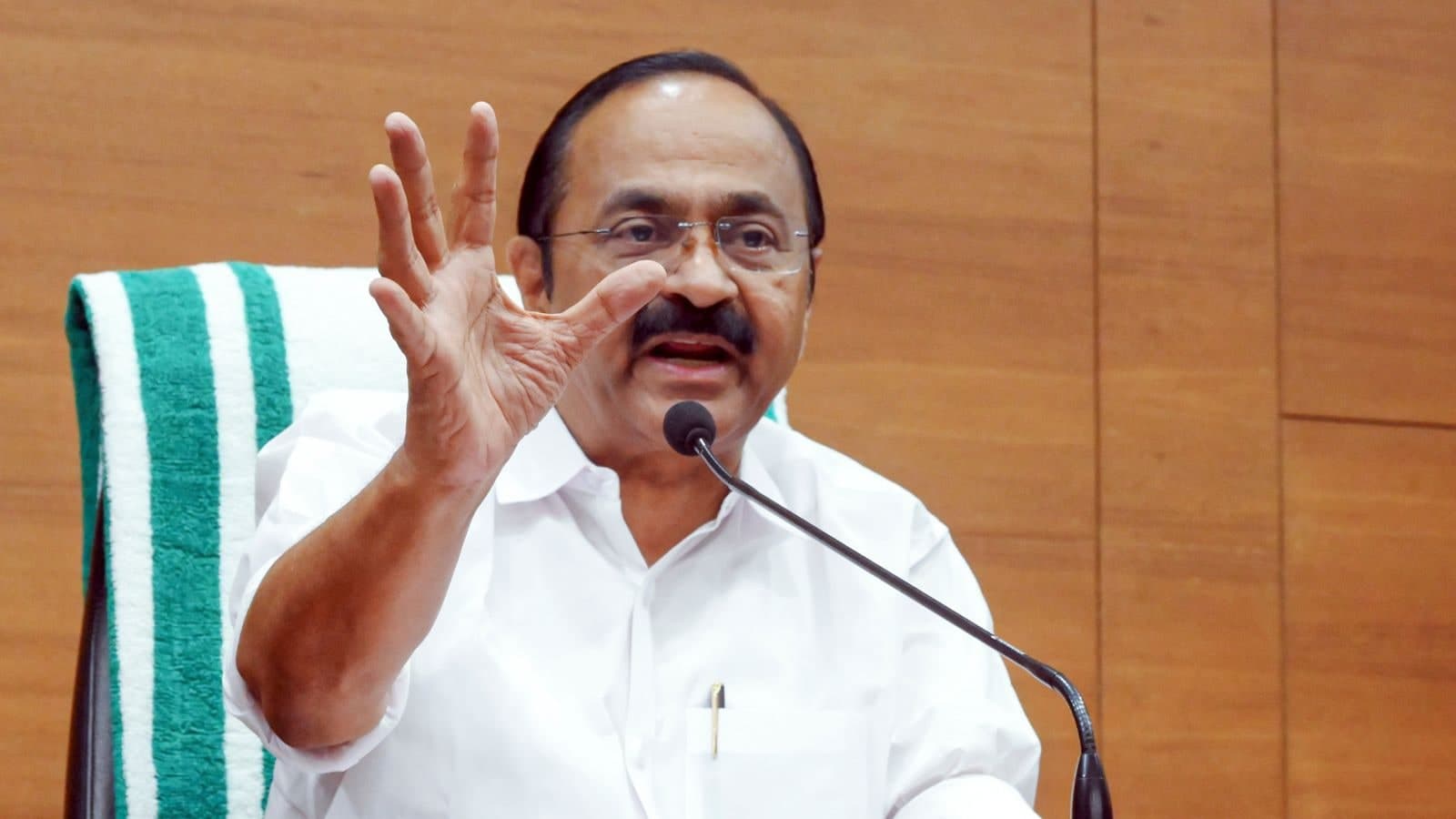
4 min readThiruvananthapuramJun 4, 2026 03:28 PM IST The white paper was presented in the assembly by Chief Minister V D Satheesan, who holds the finance portfolio, on Thursday (PTI Photo)A white paper on the fiscal health of Kerala said the state must create conditions for massive private investment due to acute shortage of resources, help the co-operative sector invest more in development and job creation, and make room for heavy investment by the central public sector. It also urged the government to make an early call on the future of the Kerala Infrastructure Investment Fund Board, which was floated by the previous LDF regime as off-budget borrowing and fund mobilisation for infra development. The white paper was presented in the assembly by Chief Minister V D Satheesan, who holds the finance portfolio, on Thursday. One of the first decisions of the newly assumed UDF cabinet last month was to appoint an expert committee to bring out the white paper on the financial health of the state.The Kerala white paper comes less than a month after neighbour Tamil Nadu said it would be releasing a similar paper on its own finances. The two southern states, while better developed than most other states in the country, are also the oldest. The Reserve Bank of India noted earlier this year in January that by 2026, Kerala and Tamil Nadu are expected to enter a so-called ‘ageing category’ when more than 15 percent of a state’s population is above the age of 60. “Ageing states are facing high old-age dependency ratios and rising social sector expenditure obligations,” the RBI had said, adding that addressing the “mounting fiscal pressures stemming from population ageing and safeguarding public finance sustainability requires a comprehensive policy strategy”. The Kerala white paper too addresses this aspect, saying that it was the time for hard political decisions and that the age of retirement for state employees should be raised to the same level as the central government. The age of retirement in Kerala for government employees is 56 years as opposed to the Centre’s 60 years. “The state will save retirement benefits of about Rs 6,000 crore with each increase in the age of retirement by one year. Another related suggestion is to have pay commissions only once in ten years as in the central government.” The report has flagged serious concerns about the state’s fiscal stress. It said the committed expenditure of Kerala absorbs about 77 percent of revenue receipts, far above the national average of 46 percent. This leaves less than one-fourth of revenue for all other spending, including development, welfare, and infrastructure. Interest payments alone were 20.9% of revenue receipts in 2025-26, nearly double the national average of 12.2 percent.Story continues below this ad Salaries and pensions are also higher than peer states, with salaries at 30.1 percent of revenue receipts in 2025-26. The report said Kerala faces a large burden of outstanding liabilities of Rs 5.07 lakh crore, with capital expenditure at only 1.3 percent of Gross State Domestic Product – one of the lowest among Indian states. This is despite a high fiscal deficit, which indicates borrowings are not being used to fund growth-generating investments. It said parallel financial structures like KIIFB and public sector undertakings deplete resources and create additional liabilities. The end of Goods and Services Tax compensation and revenue deficit grants from the Centre, coupled with stricter fiscal deficit targets, have worsened the situation. On expenditure, the new government inherits accumulated payment arrears: Rs 21,670 crore for dearness allowance and Rs 14,387 crore under dearness relief. If other deferred payments are taken into account, the total inherited liability of the state is around Rs 48,733 crore, according to the data furnished by the state’s Finance Department. This is almost as large as Kerala’s net annual borrowing, the report said.Story continues belo
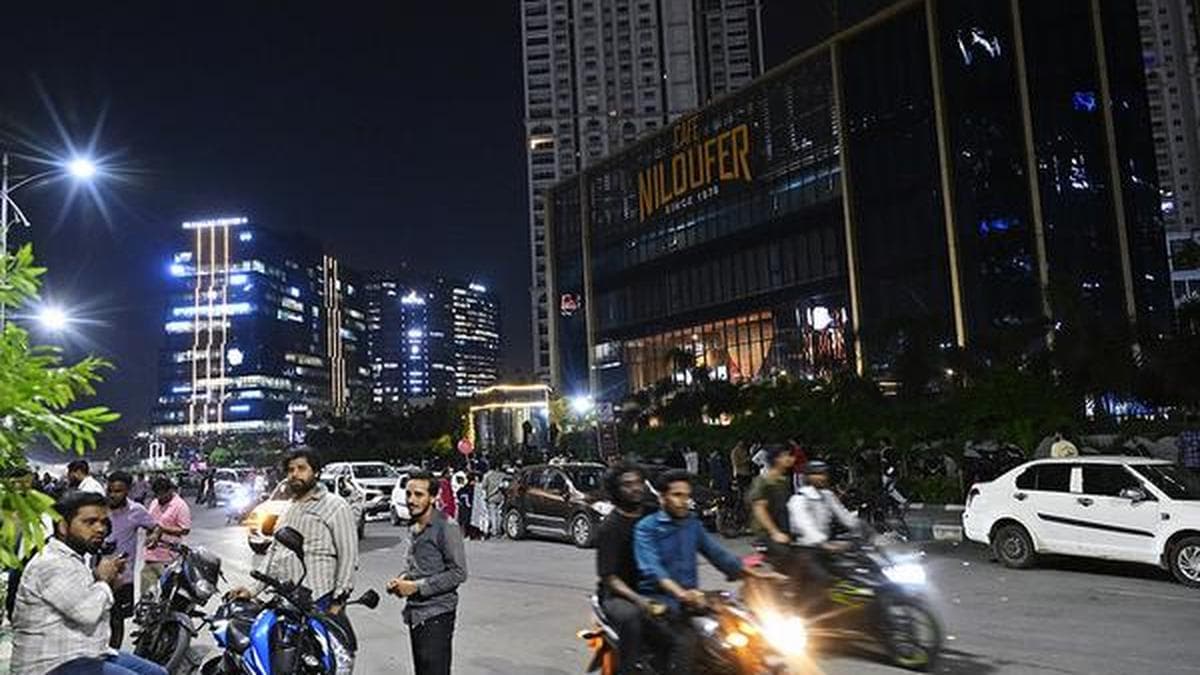
Visitors with their vehicles parked illegally on the Cafe Niloufer–My Home Bhooja Road in Knowledge City in Hyderabad. | Photo Credit: NAGARA GOPAL Paid parking facilities could soon be introduced along some of Hyderabad’s busiest IT corridor roads as the Cyberabad police seek to tackle illegal parking, traffic congestion and recurring incidents of street racing and dangerous driving in and around Knowledge City, Raidurgam.The proposal comes amid mounting concerns over key arterial roads connecting major IT parks, office campuses, residential towers and commercial hubs, including the Durgam Cheruvu Cable Bridge corridor, which are increasingly being used for roadside parking, late-night gatherings and other activities, reducing carrying capacity and contributing to traffic bottlenecks and law-and-order concerns.The focus is on the Cafe Niloufer–My Home Bhooja Road in Knowledge City and the ITC Kohenur road in Madhapur, both of which attract thousands of visitors every day. On many evenings, long rows of cars and motorcycles can be seen parked on both sides of the nearly one-kilometre stretch from Cafe Niloufer to beyond T-Hub, leaving barely 1.5 to 2 lanes available for through traffic on roads designed to carry large volumes of vehicles.According to a senior Cyberabad police official, discussions are under way with IT companies and commercial establishments on these stretches to create designated paid parking spaces for motorists requiring short-term parking. A vacant parcel of land belonging to the Telangana Industrial Infrastructure Corporation (TGIIC) has been identified as one of the locations for the proposed facility.Although many commercial establishments already provide cellar and underground parking, a significant number of visitors continue to leave their vehicles on roadsides, effectively turning carriageways into informal parking zones.“We are trying to create alternative parking facilities so that people who genuinely need to stop for a short duration have a designated space. At the same time, we will be stepping up active towing enforcement on these roads. Vehicles parked on the carriageway will be removed immediately,” the officer told The Hindu.Police say the issue extends beyond congestion. The Knowledge City stretch has, over the past few years, emerged as one of the city’s recurring hotspots for dangerous driving, drag-racing attempts, motorcycle stunts and other prohibited activities, prompting repeated enforcement drives.On May 24, four youths, including a 19-year-old degree student, were booked after a modified car was involved in stunt driving in the area. Similar cases have surfaced repeatedly over the past year, drawing complaints from residents and regular commuters and prompting calls for stricter enforcement. The Sattva Knowledge City complex that has some of the toniest restaurants in the city. | Photo Credit: Serish Nanisetti A similar problem persists on the food street stretch near ITC Kohenur in Madhapur, where ‘No Parking’ and ‘Towing Zone’ boards have done little to deter motorists. Despite repeated enforcement measures, vehicles continue to be parked along the median and road shoulders well past midnight, causing traffic disruptions at unusual hours.Police believe the proposed paid parking model, coupled with strict towing enforcement, could help restore these roads to their primary function as transport corridors while providing legitimate parking options for visitors and office-goers. Published - June 04, 2026 09:24 am IST

Patiala house court on Wednesday framed formal charges against Bollywood actor Jacqueline Fernandez, Sukesh Chandrasekhar, and Leena Maria Paul in the money laundering case. They have been put on trial by the court.The charges are also formally framed in MCOCA linked with Extortion Allegations against Sukesh Chandrasekhar, Leena Maria Paul and others.Additional Sessions Judge (ASJ) Prashant Sharma formally framed charges against the respective accused persons in the Money laundering case and MCOCA case linked with the alleged extortion of Rs. 200 crores from Aditi Singh.Bollywood actor Jacqueline Fernandez appeared before the court and denied the charges. She claimed a trial in a money laundering case. She is Accused in money laundering case only.However, Sukesh signed the charges in the money laundering case; he refused to sign the charges in the MCOCA case.His wife, Leena Maria, signed the charges in protest in the MCOCA case.All others signed the charges and claimed a trial. There are 17 accsued in the MCOCA case and 21 accused in the money laundering case.The money laundering case is listed for hearing on July 16, and the MCOCA Case is listed for hearing on July 14.The court will record the prosecution's evidence in both cases as per the list of witnesses provided by the prosecution.On May 30, the court had directed framing of charges against Sukesh Chandrasekhar, Leena Maria Paul, Bollywood actor Jacqueline Fernandes and others in an alleged money laundering case linked with Rs. 200 crores alleged extortion from Aditi Singh.The charges have also been directed to be framed against Sukesh Chandrasekhar, Leena Maria Paul and others in the MCOCA case linked with the Rs. 200 crores alleged extortion. Jacqueline is not an accused in the extortion case.What did the judge say?Additional Sessions Judge (ASJ) Prashant Sharma directed to frame charges against the accused persons in both cases." I conclude that prima facie, there is sufficient material on record based upon which strong suspicion is raised against all accused persons namely Sukesh Chandrasekhar, Leena Maria Paul alias Leena Paulose, Deepak Ramnani, Pradeep Ramdanee, B. Mohanraj, Arun Muthu, D. Kamlesh Kothari, Pinky Irani, Jacqueline Fernandez, Pooja Singh, Dharam Singh Meena, Mahender Prasad Sundriyal, Sunder Bora, Komal Poddar, Jitender Narula, Avinash Kumar, Jai Prakash Singhal, for which said accused persons have to be charged with offence under section 3 of PMLA, punishable under section 4 of PMLA," ASJ Prashant Sharma while framing charges in money laundering case.Delhi Police had filed a case on the Complaint of Aditi Singh. Thereafter, a case of Money laundering was lodged by the Enforcement Directorate.The Delhi High Court had rejected the plea of Jacqueline Fernandes seeking the quashing of the supplementary charge sheet against her. She was named in a supplementary charge sheet filed by the ED.After taking cognisance of ED's charge sheet, an issued summons to Jacqueline Fernandes. She was granted bail after she appeared before the court.Sukesh Chandrasekhar is in custody. However, his wife was granted bail by the High Court in a money laundering case. Her plea for bail in MCOCA was rejected by the Delhi High Court. The bail pleas of other accused are subjudice before the Delhi High Court.On June 1, the Delhi High Court refused to stay the formal framing of charges. Sukesh Chandrasekhar has approached the High Court.Recently, the Bollywood actor Jacqueline Fernandes withdrew her application to turn approver in a money laundering case. (ANI)Stay updated with the latest Trending, India , World and US news. HomeNewsIndia ₹200 crore extortion case: Court frames charges; Jacqueline Fernandez, Sukesh Chandrasekhar, Leena Maria Paul, othersMore

3 min readBengaluruJun 1, 2026 12:28 PM IST Priyanka Chopra gave a visual treat to her fans. (Photo: Priyanka Chopra/Instagram)Priyanka Chopra Jonas is enjoying her summer in India as she shoots for her next pan-India feature — SS Rajamouli’s much-awaited film Varanasi, co-starring Mahesh Babu. She shared glimpses of her relaxing Sunday on social media. Priyanka is in Hyderabad, busy shooting for her first Indian film in almost 7 years. She was last seen in The Sky is Pink. On Sunday night, Priyanka treated her fans to a photo dump that included moments of self-care, a refreshing swim, skincare sessions, and her favorite summer treats. Sharing photos and videos, she wrote, “Sunday done right… now summer here I come,” giving fans a peek into how she balances work and relaxation amid the demanding shoot schedule. Priyanka also revealed that she joined the rest of India to watch the IPL 2026 final, where Royal Challengers Bengaluru (RCB) defeated the Gujarat Titans. Priyanka wrote on her Instagram Story, “Final toh dekhna banta hai.” See recent photos of Priyanka Chopra: (Photo: Priyanka Chopra/Instagram)Priyanka Chopra Jonas is currently in Hyderabad shooting for her Indian comeback film Varanasi, directed by SS Rajamouli. The film also stars Mahesh Babu and Prithviraj Sukumaran. The film has been creating a massive buzz among movie lovers due to its scale, star cast and SS Rajamouli’s ambitious vision. The film is reportedly centered on Rudhra, whose journey unfolds as the sacred city of Varanasi confronts the looming danger of an asteroid strike. Blending epic adventure with Indian mythology and cultural heritage, the narrative is said to span different eras and locations across the globe. The mega-budget entertainer is being shot across multiple locations, including Hyderabad, Odisha, and Kenya. With an estimated production cost of Rs 1,000–1,300 crore, Varanasi is poised to rank among the costliest films ever produced in India. The highly anticipated project is currently eyeing a theatrical release in April 2027. Priyanka Chopra Jonas stays primarily in Los Angeles, with her husband Nick Jonas and their daughter Malti.
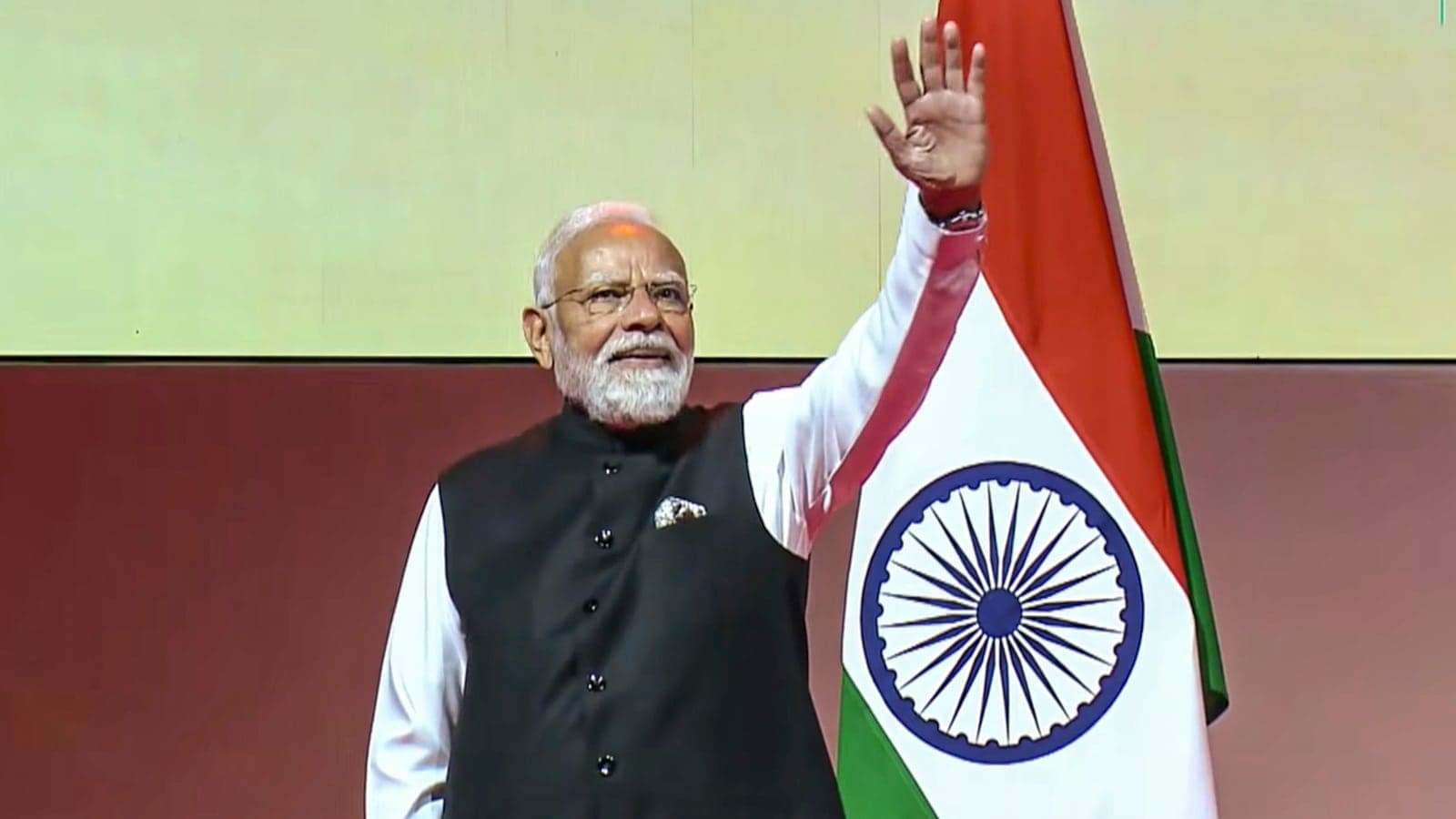
1 min readNew DelhiUpdated: May 16, 2026 07:28 AM IST Prime Minister Narendra Modi said that the claims made by the report were "totally false." (PTI Photo)Dismissing an online news report, Prime Minister Narendra Modi Friday said that there were no restrictions being put on foreign travel. The report had claimed that the Centre was considering to levy a tax on foreign travel.Rejecting the claims, PM Modi wrote on X: “This is totally false. Not an iota of truth in this. There is no question of putting such restrictions on foreign travel.” This is totally false. Not an iota of truth in this. There is no question of putting such restrictions on foreign travel. We remain committed to improving ‘Ease of Doing Business’ and ‘Ease of Living’ for our people. https://t.co/9lxjbxz0nV — Narendra Modi (@narendramodi) May 15, 2026 He also asserted the Centre’s commitment to improve ‘Ease of Doing Business’ and ‘Ease of Living’ for Indian citizens. Following PM’s clarification, the media organisation issued an apology and withdrew its report. Earlier this week, the prime minister had called on Indian citizens to avoid non-essential foreign travel, reduce fuel consumption, and refrain from buying gold for a year.
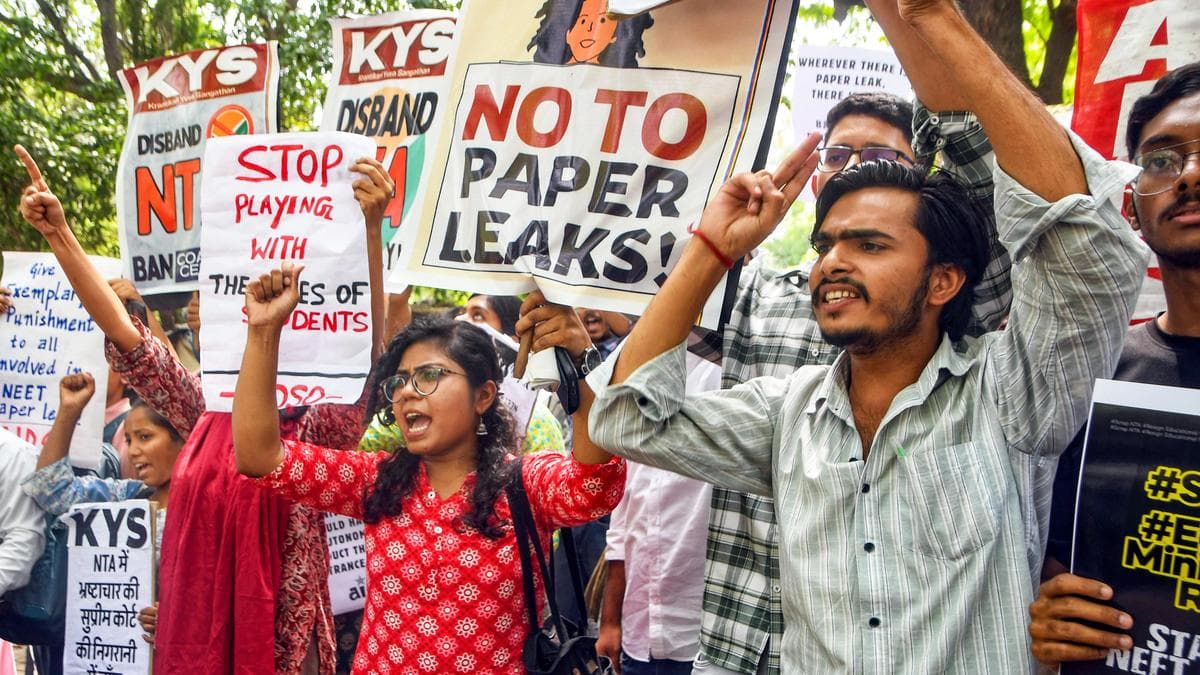
The Federation of Indian Medical Association (FAIMA) has flagged the “recurring, systemic, and catastrophic” failure of the National Testing Agency (NTA) in conducting the National Eligibility cum Entrance Test (NEET-UG) and has urged the Supreme Court to take a “stricter approach”.The NTA “casually” ignored recommendations of the Radhakrishnan Committee and the top court’s directions after the 2024 leak. “Mechanism should be in place to ensure that any non-compliances will lead to exemplary penalties,” FAIMA said in a petition.FAIMA said “repeated digital breaches” and “administrative paralysis” in the NTA that cause multiple paper leaks warrant that the Supreme Court should invoke its extraordinary jurisdiction under Article 142, which it had earlier used to “strip the Medical Council of India of its independent policy making powers”.The petition wanted the apex court to “step in and order the creation of a modern, foolproof, and transparent system so that the futures of millions of students are never put at risk again”.Over-reliance on vendorsThe petition said NTA relies heavily on unverified private service providers for logistics, including centre management and security, funnelling public funds into lowest bidder infrastructure despite repeated warnings against it by Parliamentary Standing Committees and the apex court when it heard the NEET UG 2024 paper leak case.It said that the top court had pointed out lapses in NTA’s system in 2024. These included unauthorised access to strongrooms, transportation of highly sensitive examination materials on e-rickshaws and through private couriers, the absence of any prescribed time limit for the submission of OMR sheets, and a complete lack of direct oversight over the invigilators. In 2024, the rear door of a strongroom in Hazaribagh was opened and unauthorised persons were permitted to access the question papers before the exam. “Despite these lapses being explicitly pointed out by SC, the NTA has failed to implement meaningful corrective action,” FAIMA said. “NTA continues to rely on risky, old-fashioned methods like physically printing question papers and using private couriers for transport making it prone to leak,” the petition said, adding, “It is also excessively dependent on third parties to outsource the management of exam centers and to the transport of exam materials thereby destroying the secrecy of this examination.”Future leaksThe petition said that attempting to re-conduct NEET-UG 2026 using the exact same flawed methods and private contractors, without first implementing the Radhakrishnan Committee’s safety measures, is “highly irresponsible”. “It practically guarantees that another paper leak will happen, causing further trauma to the students,” it said.In 2024, the Supreme Court had cautioned that the NTA, which is entrusted with the conduct of competitive exams, cannot afford missteps and then course-correct later. Flip-flops are an anathema to fairness, it had said.The petition said that though NTA had assured candidates that the exam process will not be tampered with, it had to cancel NEET-UG 2026. “Such contradictory and reactive administrative conduct demonstrates absence of institutional preparedness, lack of responsible decision-making, and complete failure to maintain the degree of certainty, and fairness which were expected from a national examination body entrusted with the future of lakhs of students,” the petition said.Cosmetic upgradesWhile the Radhakrishnan Committee suggested that the NTA upgrade its logistics, storage and transportation protocols, the NTA continued to rely on a massive, outdated physical chain of custody. It did not transition to a secure and encrypted digital delivery system.“By irresponsibly outsourcing these critical duties to lowest-bidder private contractors and unverified logistical partners, the NTA left the question papers completely exposed. This total failure in physical security allowed criminals to easily access, cop

The Union cabinet on Wednesday approved a ₹37,500 crore coal gasification scheme that aims to convert India’s vast coal and lignite reserves into synthesis gas for use as fuel and in the manufacture of fertilisers, chemicals and other products — cutting the country’s dependence on costly energy imports.The Gevra mines in Chhattisgarh, Asia's largest opencast coalmine. (Reuters)The scheme targets gasification of approximately 75 million tonnes (MT) of coal and lignite, advancing the national goal of gasifying 100 MT by 2030. India’s import bill for key substitutable products — liquefied natural gas (LNG), urea, ammonium nitrate, ammonia, coking coal, methanol, dimethyl ether (DME) and others — stood at approximately ₹2.77 lakh crore in FY25, a vulnerability the government says has been further exposed by the ongoing geopolitical situation in West Asia.Union information and broadcasting minister Ashwini Vaishnaw, who briefed the media after the cabinet meeting chaired by Prime Minister Narendra Modi, called it a “major decision” towards self-reliance in gas. “Coal is abundantly available in India,” he said, adding that the country holds 401 billion tonnes of known coal reserves — enough for the next 200 years. India currently produces natural gas sufficient to meet only half its requirements, with the rest imported, he said.India’s import dependence for urea stands at 20%, for ammonia at nearly 100%, and for methanol at about 90%. The country imports over 50% of its LNG requirements.Under the scheme, investors will receive a financial incentive of up to 20% of the cost of plant and machinery, disbursed in four equal instalments tied to project milestones. Eligible investors will be selected through competitive bidding, with an evaluation framework benchmarking project cost, coal input, and syngas output.The incentive for any single project is capped at ₹5,000 crore; for any single product — except synthetic natural gas (SNG) and urea — ₹9,000 crore; and for any single entity group across all projects at ₹12,000 crore. The scheme is technology-agnostic, though adoption of indigenous technologies is encouraged.In an accompanying reform, the government has extended coal linkage tenure to 30 years under the “Production of Syngas leading to Coal Gasification” sub-sector of the non-regulated sector (NRS) linkage auction framework, providing long-term policy certainty for investors.The government launched its coal gasification mission in 2020, set the 100 MT target for 2030, and approved two flagship joint venture projects — a CIL-GAIL coal-to-SNG plant in West Bengal and a CIL-BHEL coal-to-ammonium nitrate plant in Odisha, together worth over ₹24,000 crore — at a Cabinet meeting in January 2024. Neither has produced commercial output. The entire ₹300 crore allocated for coal gasification in FY26 remained unspent as of January 2026, HT reported on April 14 citing government records.The government expects the scheme to now mobilise investment of about ₹3 lakh crore and generate approximately 50,000 direct and indirect jobs across 25 projects in coal-bearing regions. Coal and lignite utilisation under the scheme is projected to yield ₹6,300 crore annually in exchequer revenue, in addition to downstream GST and other levies.India holds one of the world’s largest coal reserves — over 401 billion tonnes — alongside lignite reserves of about 47 billion tonnes. Coal accounts for over 55% of the country’s energy mix. Gasification converts coal and lignite into synthesis gas, a feedstock for producing fuels, fertilisers, and chemicals domestically, enabling India to substitute high-value imports and reduce exposure to global supply disruptions and price volatility.
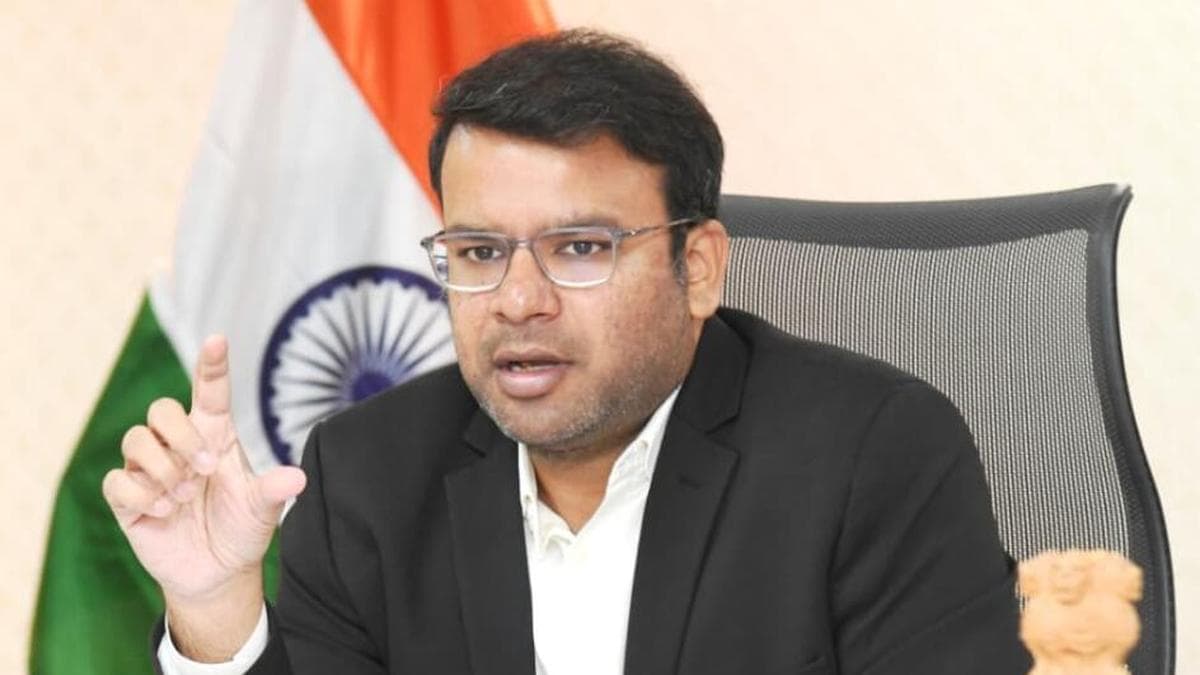
Visakhapatnam Municipal Corporation (GVMC) Commissioner Ketan Garg. File | Photo Credit: Special Arrangement The National Apex Committee (NAC) of the Ministry of Housing and Urban Affairs (MoHUA) has given in-principle approval to three major proposals for Visakhapatnam’s development, with a total outlay of ₹1,501.03 crore.The projects were cleared under the Urban Challenge Fund (UCF) at a meeting in New Delhi, Greater Visakhapatnam Municipal Corporation (GVMC) Commissioner Ketan Garg told The Hindu on Wednesday (May 13, 2026).Madhurawada gets the lion’s shareThe largest share of the investment is going to the Madhurawada growth corridor, with ₹725.18 crore for a 24/7 smart water supply system and ₹658.61 crore for an underground drainage (UGD) network. These projects include a 65 MLD water treatment plant and a 20 MLD sewage treatment plant using Sequential Batch Reactor (SBR) technology.Greater Visakhapatnam Municipal CorporationThree projects, ₹1,501.03 crore in totalCleared in-principle by the National Apex Committee under the Urban Challenge Fund65 MLDwater treatment plant37,407AMI smart connections planned401 kmsewer network20 MLDsewage treatment plant (SBR)7,857connections, bulk and semi-bulkSCADAbased monitoring systemCity-wide automation against water lossesA third project, valued at ₹117.24 crore, focuses on the automation of bulk and semi-bulk water metering across Visakhapatnam. By integrating Supervisory Control and Data Acquisition (SCADA)-based systems and installing over 7,800 meters, the GVMC aims to improve billing accuracy, monitor production nodes in real time and reduce non-revenue water (NRW) leakages.Blended finance modelThe portfolio is structured under a blended finance model, combining a 25% Government of India (GoI) grant via the UCF (₹375.26 crore) with multilateral financing from the International Finance Corporation (IFC) and domestic bank lending from Canara Bank and Indian Overseas Bank (IOB).GVMC Commissioner Ketan Garg said, “The sanction was made as a resounding endorsement of the city’s commitment to evidence-based and fiscally responsible infrastructure planning.” Published - May 13, 2026 02:58 pm IST