
general
Karnataka To Review Free Power Scheme, Door-To-Door Verification From Tomorrow
Karnataka To Review Free Power Scheme, Door-To-Door Verification From Tomorrow NDTV
14 stories
Karnataka To Review Free Power Scheme, Door-To-Door Verification From Tomorrow NDTV
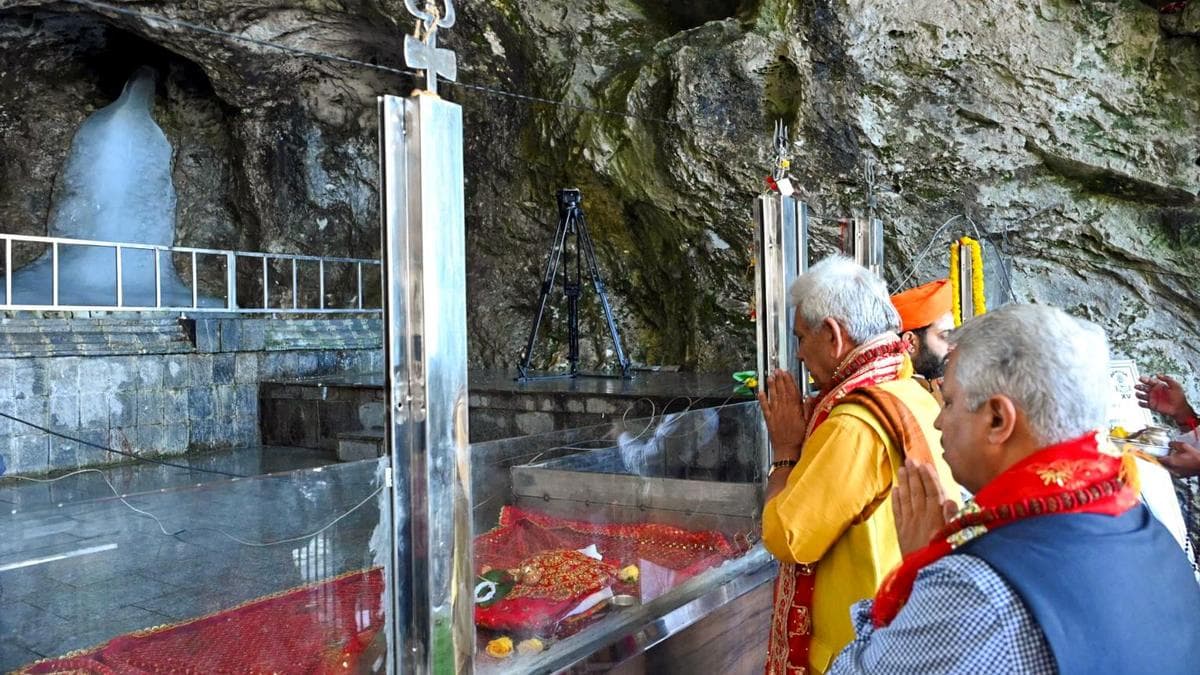
Jammu and Kashmir Lieutenant Governor Manoj Sinha offers prayers to the Amarnath Ice Lingam (Baba Barfani) at the Holy Cave Shrine of Shri Amarnath Ji (or Amarnath Temple), in Anantnag on June 29, 2026. | Photo Credit: ANI Jammu and Kashmir Lieutenant Governor Manoj Sinha on Monday (June 29, 2026) performed 'Pratham Puja' at the cave shrine of Amarnath, marking the ceremonial start of the annual pilgrimage beginning July 3.Mr. Sinha sought the divine blessings of Baba Barfani and prayed for the peace, prosperity, health and well-being of all, an official statement said.He also urged the devotees of Baba Barfani to join the pilgrimage in great numbers and experience the spiritual journey.Mr. Sinha said the administration, the Amarnath shrine board, Army, police, security forces, local communities, service providers and volunteers are working in complete synergy to ensure a safe, hassle-free and a memorable pilgrimage for devotees.With significantly upgraded infrastructure, enhanced facilities and invaluable support of people, the authorities are fully prepared to welcome the devotees for a spiritually fulfilling journey, he said.The Shri Amarnath Ji Shrine Board (SASB) organises the ‘Pratham Puja’ at the cave shrine on Jyeshtha Purnima annually.The 57-day Amarnath Yatra will formally commence on July 3 via two traditional routes — the Pahalgam axis in Anantnag district and Baltal in Ganderbal district.The Yatra will culminate on August 28 on Raksha Bandhan.DGP Nalin Prabhat, Special DG (coordination) S.J.M. Gillani, SASB CEO Mandeep Bhandari and Kashmir Divisional Commissioner Anshul Garg accompanied Mr. Sinha to the cave shrine. Published - June 29, 2026 01:27 pm IST

France has recorded its hottest day since records began in 1947, its national weather agency says, breaking a record set on Tuesday as an early summer heatwave grips western Europe.The national temperature indicator - an average of day and night temperatures across dozens of locations - hit 30C, up from 29.8C a day earlier.More than half the country remains under a red heat alert with tens of thousands of homes in the west without power. The temperature in Paris and many other areas broke 40C on Wednesday.It comes as a searing European heatwave continues to cause deaths and disruption, particularly in France, Spain and Italy.Climate change is driving up temperatures around the world - but particularly in Europe. It is the fastest warming continent, heating up twice as fast as the global average, according to the Copernicus climate service, external.This is causing increased summer heatwaves, greater pressure on Europe's water supply, and more intense wildfires.The heatwave spread to other parts of western Europe on Wednesday, with an orange alert for dangerous weather in place for parts of the Netherlands.A rare red heat alert is in place for parts of the UK, with June records breaking on Wednesday as the English county of Hampshire recorded 36.1C. Temperatures could hit 38C on Thursday, forecasters say.Meanwhile, Météo-France recorded provisional maximum temperatures across the country that "remained relatively stable compared to the previous day". Highs ranged from 39C to 42C across much of western France, with 43C recorded in the Poitou-Charentes-Val de Loire region, slightly lower than the 44.3C seen in Pissos on Tuesday.Overnight, minimum temperatures had exceeded 28C in the Vendée region and over 25C in Paris.Sights in the French capital Paris have also been impacted by the hot weather.The world's most visited museum, the Louvre, said it would close its doors earlier this week. The Louvre said its historic building "remains fragile, external and is not sufficiently adapted to climate change", adding that the "build-up of heat is at its highest at the end of the day, and intensified by the volume of visitors".The Eiffel Tower also closed earlier than usual on Tuesday and was to do so again on Wednesday.Among those who died in heatwave-related drownings was a six-year-old child who had gone to an unsupervised beach with his parents in Bègles, Gironde on Tuesday evening.A 17-year-old girl also drowned while swimming in a prohibited area of the Marne river in Champs-sur-Marne, on the outskirts of Paris.Several drownings have also been reported in Germany, including that of a 26-year-old man who died after going into the Danube River near Regensburg in Bavaria on Tuesday evening. Emergency services spent hours searching for the Syrian man, who could not swim, using a helicopter and boats. Attempts to resuscitate him after he was found some hours later were unsuccessful. Temperatures were expected to reach 37C on Wednesday in Germany, and people are being warned not to underestimate the dangers of swimming.There are also fears of drought in some regions. In Brandenburg, Hesse and North Rhine-Westphalia, authorities are urging people to use water sparingly, German newspaper Die Welt reports. Barbecue bans have also been introduced in cities including Stuttgart and Freiburg in Baden-Württemberg, local media report.While Spain has experienced baking heat over the last few days, temperatures were expected to start falling on the Iberian peninsula on Wednesday.But red heat alerts remain in place for parts of northern Spain, with a maximum temperature of 42C possible in parts of the Basque country, forecaster Aemet said.Spain's state meteorological agency said the country recorded its highest daily average temperatures in June since at least 1950, with Tuesday's average of 28.17C breaking the previous 2025 record of 28.01C.In Italy, meanwhile, 16 provincial capitals are now under red heat alerts, with Latina added to the list on W
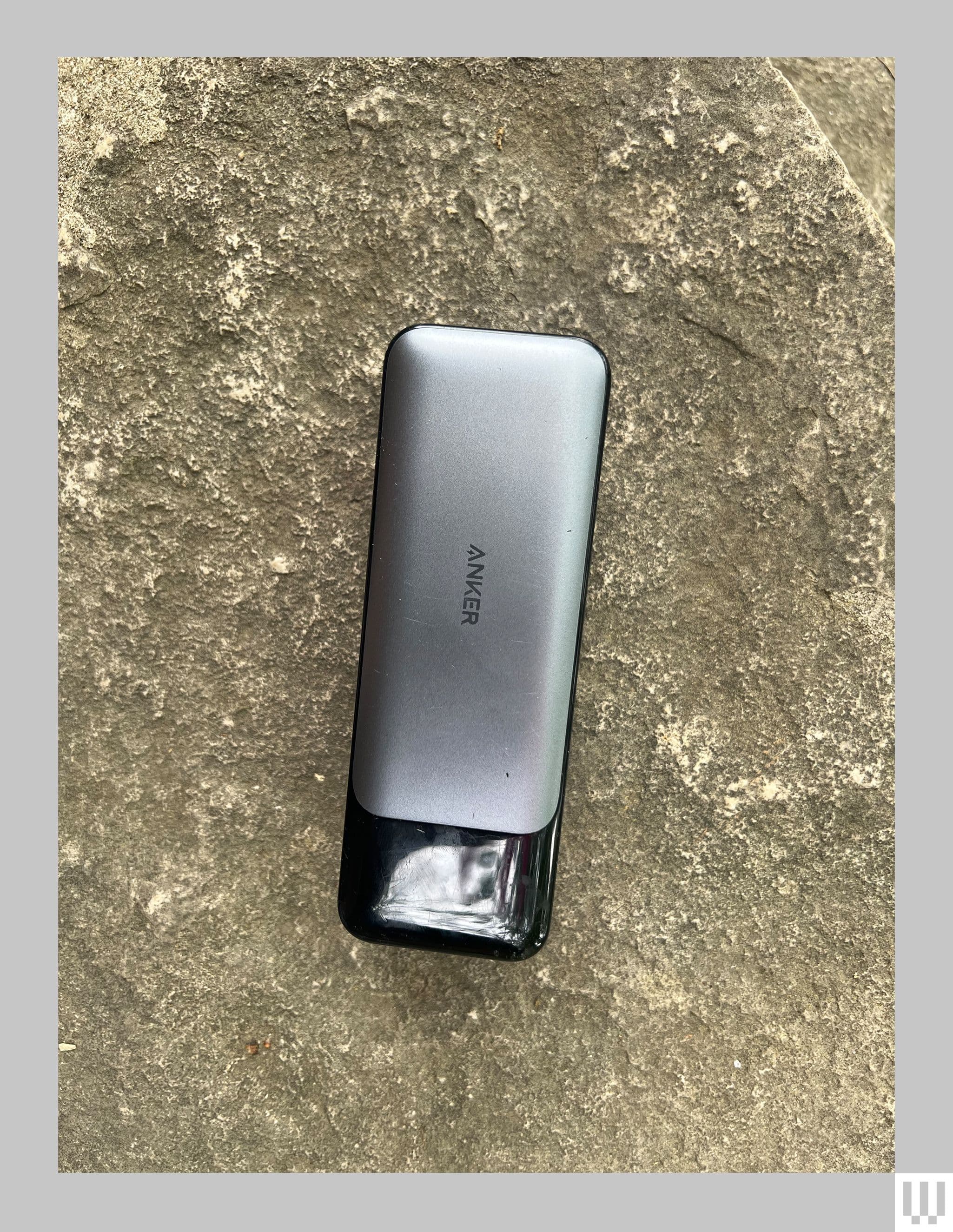
Jun 23, 2026 10:56 AMThis Power Bank Is So Good, I Bought TwoThe Anker 737 is my personal go-to power bank, and it's on sale for Amazon Prime Day.The Anker 737 used to be WIRED’s top pick among all power banks, which is why I first purchased it. I needed something reliable to use while camping for a few days; it couldn’t be too bulky and had to be able to charge multiple gadgets simultaneously. The Anker 737 fit the bill. Even outside of camping, it’s proven to be a magical piece of gear that fits seamlessly into my daily life, fueling my Instagram-scroll sessions and then some, given that it can charge three devices at once. Right now, during Amazon’s Prime Day event, it's on sale for close to the best price I’ve tracked. (It has fallen a bit farther in price before, but not since Black Friday.)Photograph: Simon HillAnker737 Power BankThis brick has a whopping 24,000-mAh capacity and can send or receive up to 140 watts. That means it can charge your laptop or iPad as well as your phone or other tech accessories. My favorite feature is that the power bank itself can be recharged in under an hour. That makes it perfect for travel, since I can top off its charge during a few spare minutes at an airport or a coffee shop. The display shows remaining battery percentage, temperature, output, and more.The only real flaw is that the brick is dense, coming in at about a pound and a half. But to me, the upsides are numerous, so much so that I purchased a second one when I misplaced my first. I always have it next to me or in my backpack. At this price, I might get a third one, just in case.Power up with unlimited access to WIRED. Get best-in-class reporting and exclusive subscriber content that's too important to ignore. Subscribe Today.Louryn Strampe is a product writer and reviewer at WIRED covering deals, beauty, home goods, and gifts. She’s written about Black Friday, Cyber Monday, Prime Day, and other shopping holidays since 2013, offering tips and tricks and sleuthing out fact-checked discounts for fun and for a living. She previously covered ... Read MoreRead MoreWired Coupons
The Emergence of India as a Global Space Power | Current Affairs Vision IAS

US President Donald Trump on Friday (local time) claimed that he would be able to stop Israel from carrying out any more strikes in Lebanon, asserting that the Israeli leadership acts on his directions due to what he calls strong mutual respect.Trump made these remarks during an interview on The Axios Show. When asked if he could influence Israeli military actions in the Middle East region, especially potential strikes on Beirut, the US President said that he would be able to exercise control over such decisions. He added, "Yeah, I will be. I mean, they have a lot of respect for me, and they do as I say."Trump's remarks come days after he signed the US-Iran interim peace deal, a 14-point Memorandum of Understanding (MoU), at Versailles, France. The agreement, which is aimed at ending the US-Iran conflict permanently, also seeks the permanent and immediate cessation of hostilities on all fronts, including Lebanon. However, so far, Tel Aviv has continued with its military offensive in Beirut to target Iran-backed Hezbollah militants, a move that has irked Trump a lot more in the last few weeks and strained ties between the two leaders.Trump-Netanyahu tiesDuring the interview, he also referred to Israeli Prime Minister Benjamin Netanyahu and said that he maintains a strong but closely watched relationship with him and added, "It's good, but we have to keep him a little bit sane."His remarks came after the US President expressed frustration with Netanyahu over jeopardising the US-Iran deal. According to reports, the Israeli prime minister was also sidelined from the negotiations that led to the interim deal. The Wall Street Journal reported that the frequent phone calls between the two leaders have now become less friendly. During a recent phone call about Beirut, Trump asked Netanyahu, "Why are you blowing up buildings?" and asked him to "stop blowing up buildings." In another call, he reportedly complained that the worldwide downturn sparked by the war could tie him to Herbert Hoover and the Great Depression of the 1930s.Since the war began in late February, the US President has yelled at Netanyahu on several occasions, a fact he acknowledged earlier this month. Earlier this week, he said, “Without the US, there would be no Israel. Without me, there would be no Israel because no other President was willing to do what I did. I have had a great relationship with Bibi. Now Bibi has to be more responsible with respect to Lebanon.”Earlier this month, both Netanyahu and Trump downplayed their rift. Speaking with CNBC, he said that while they sometimes have "tactical disagreements," they "agree on the main things." He said, "Sometimes we have, as in the best of families, these tactical disagreements, but we always find a way to work them out, and we do so as great friends."The Israeli PM added, "We can disagree in the morning" and find common ground by the afternoon.During the interview, Trump reiterated that without him, Israel would have been "eviscerated." He added, "Remember this: if I don't terminate the JCPOA--road to--remember that was a road to a nuclear weapon legally. It says right there. And Obama thought he could pay them off. He gave them billions and billions of dollars, 1.7 billion in cash. You know, it was a well-known story, but it didn't work. You can't bribe your way out of it; you can't pay your way. But if I didn't do that and if I didn't attack their nuclear supply 10 months ago with the B-2 bombers, Israel would not exist today."Israel-Hezbollah ceasefireOn Friday (local time), reports suggest that a renewed ceasefire agreement was reached between Israel and Hezbollah amid efforts to de-escalate tensions in the region.CNN, citing sources familiar with the negotiations, reported that Israel and Hezbollah have reached an agreement to reinstate a ceasefire, which came into effect at 9 am (local time).However, Israel Defence Forces (IDF) Spokesperson Brigadier General Effie Defrin said that the Israeli forces would c

After you’ve worked on rockets that find their way to outer space, it can be hard to come up with a second act. For SpaceX alumni Andrew Redd, it meant looking deep in the ocean. Redd, who grew up in the Pacific Northwest, a region affected by uncharacteristic heat waves and catastrophic fires in recent years, knew he wanted to tackle something in renewable energy. “But the experience at a very hardcore company like SpaceX made me realize that I can’t just come up with an incremental solution. It actually has to be brand new and it has to be approached from first principles,” according to Redd, who was an engineer on Dragon and Starship at SpaceX. Redd left SpaceX and founded Endurance Energy, a startup that has raised a $54 million Series A to eventually harness terawatts of geothermal energy deep in the ocean, TechCrunch has learned. Founders Fund led the round with participation from 72 Ventures, Construct Captial, Felisis Ventures, First Round Capital, Riot Ventures, and Voyager Ventures. The new funding will allow the company to develop its plans for power plants at a time of surging energy demand from AI data centers, electric vehicles, and heavy industry. Since founding the company last year, Redd has grown the team to 21 employees, 11 of whom used to work at SpaceX. The company’s vice president of engineering previously worked at Helion Energy, the fusion startup. Geothermal energy isn’t a new idea — humans have been using the Earth’s heat for millennia, whether it be from spa-like hot springs or geothermal power plants. But Redd, drawing on his experience at SpaceX, figured there was another opportunity people were overlooking. Here’s how he distilled the problem: Any future energy source should be renewable, or at least non-polluting, in his opinion. “That’s my non-negotiable,” said Reed, who is CEO of Endurance. It should also be available 24/7 — or baseload power, as the industry calls it — and it should quickly deployable and able to generate tens or hundreds of gigawatts of electricity, according to Redd. He quickly ruled out nuclear power because regulatory and construction timelines can stretch on for years. Solar and wind aren’t available 24/7 without batteries, and hydropower is limited in where it can be built (plus all the good spots have been taken). That left geothermal. “Geothermal is the only real deployable, baseload renewable,” he said. “But why is it only 0.4% of U.S. energy?” There are other startups pursuing geothermal, including Fervo and Zanskar. But those companies need to drill thousands of feet into the Earth’s crust to access temperatures hot enough to drive a power plant. So far, the best opportunities for many geothermal startups has been in the Western U.S., far from large population centers. The best places to drill, where the crust is thin and magma flows close to the surface, like in Iceland or California, have long been claimed. More recently, startups like Fervo Energy, XGS Energy, and Sage Geosystems have found other sites, but to find rocks that are hot enough to drive a power plant, they need to drill thousands of feed deeper. Those locations have so far been away from large population centers. But no one has tapped the oceans. At several points around the globe, the Earth’s tectonic plates are spreading apart, allowing hot magma to flow to the surface. The U.S. West Coast, Japan, and a good chunk of Southeast Asia are near the so-called Ring of Fire, the geologically active zone that encircles the Pacific Ocean. Heading out to sea poses several challenges. Operating underwater, at the depths Endurance is proposing, isn’t easy. Robots will need to do much of the work. Saltwater is famously corrosive, so anything placed down there will have to be hardened against both water pressure and corrosion. But Redd said those are surmountable hurdles, pointing to the oil and gas industry’s decades of experience drilling in the ocean. Endurance’s work should pose less risk to th

Visa has announced an undisclosed investment in AI coding platform Replit. The two companies are also exploring how to integrate Visa’s payment products into Replit, so that developers — and the AI agents they build — can accept payments directly from customers without leaving the platform. Visa added that more than 1,000 of its employees have been using Replit for prototyping and development. As part of the partnership, the companies are exploring how developers on Replit can use Visa’s suite for AI-powered payments, called Visa Intelligent Commerce, as well as Visa’s Trusted Agent Protocol — a system that allows AI agents to securely identify themselves by sharing information like their intent and relevant customer details, so that payments made by agents can be verified and trusted. All of these projects are in an exploratory stage, and the companies haven’t formally announced any joint products. The investment reflects a broader race to establish the infrastructure for so-called agentic payments — a world in which AI agents buy and sell things on users’ behalf. Besides Replit and Visa, other tech companies are also moving quickly in this space. Retail investing platform Robinhood now wants people to use agents to trade, while Google wants users to deploy agents for shopping. “Over the last few months, our enterprise traction has been growing, and Visa coming on board underscores our mission of making coding available to anyone in a secure and robust manner,” Amjad Masad, CEO and founder of Replit, said in a statement. Replit is also launching self-serve enterprise access, allowing companies to sign contracts worth up to $200,000 without talking to a salesperson. The tier offers enterprise-grade compliance and controls, including SSO — single sign-on, a system that lets employees access multiple tools with one set of credentials — audit logs, and advanced permissions. “Our continued customer and partner additions in the enterprise, coupled with our new self-serve program, bring us closer to a world where any team can go from idea to production-ready software quickly and securely,” Masad added. As demand for so-called vibe-coding platforms has shot up, valuations of startups like Replit, Cursor, and Lovable have risen rapidly, along with investor interest. In September of last year, Replit hit the $3 billion valuation mark. Six months later, in March, the company raised $400 million in a Series D led by Georgian Partners at a $9 billion valuation — tripling its valuation in under six months. In May at TechCrunch’s StrictlyVC event in San Francisco, Masad said that Replit’s churn is very low, and customers are sticking around. “Churn is very, very low, and net retention is incredibly high — 300% in some cases. What we actually hear from customers is that when engineers get nervous and try to rebuild an app into their own stack, they often make it worse. Once enterprises get comfortable with the full Replit stack — especially when we set up a single-tenant environment for them — they keep the apps on Replit,” he said. When you purchase through links in our articles, we may earn a small commission. This doesn’t affect our editorial independence. Ivan covers global consumer tech developments at TechCrunch. He is based out of India and has previously worked at publications including Huffington Post and The Next Web. You can contact or verify outreach from Ivan by emailing im@ivanmehta.com or via encrypted message at ivan.42 on Signal. View Bio
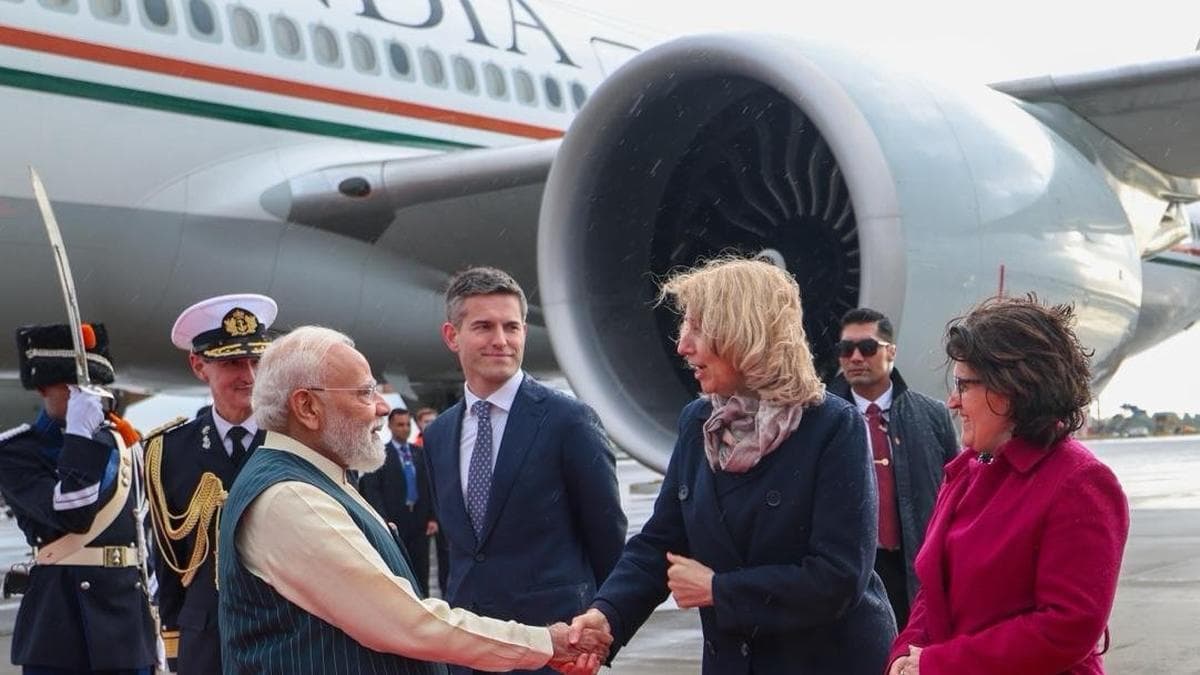
PM Modi was received at the airport by Rear Admiral Ludger Brummelaar, Adjutant-General and Chief of the Military Household of His Majesty the King; Dutch Foreign Minister Tom Berendsen; and India’s Ambassador to the Netherlands Kumar Tuhi. Photo Credit: X@narendramodi Prime Minister Narendra Modi arrived in the Netherlands on Friday (May 15, 2026) on the second leg of his five-nation tour, during which he will hold talks with his Dutch counterpart Rob Jetten to further deepen bilateral cooperation in areas such as trade, technology, defence and renewable energy.PM Modi was received at the airport by Rear Admiral Ludger Brummelaar, Adjutant-General and Chief of the Military Household of His Majesty the King; Dutch Foreign Minister Tom Berendsen; and India’s Ambassador to the Netherlands Kumar Tuhin, along with other senior officials of the Dutch Government.“Landed in Amsterdam. This visit to the Netherlands comes at a time when the India-E.U. Free Trade Agreement has given a major impetus to trade and investment linkages,” the Prime Minister said in a social media post soon after his arrival.“It offers an opportunity to deepen relations in areas like semiconductors, water, clean energy and more,” he added.Mr. Modi said he would hold talks with Prime Minister Jetten and call on King Willem-Alexander and Queen Maxima.The Prime Minister also said he looked forward to addressing a community programme during the visit.The Ministry of External Affairs (MEA) spokesperson Randhir Jaiswal, in a social media post, said the visit would provide an "opportunity to further strengthen the multifaceted India-Netherlands partnership and to engage with the largest Indian diaspora on mainland Europe".Mr. Modi arrived in the Netherlands after a brief stopover of around two-and-a-half hours in the United Arab Emirates, where he held talks with UAE President Mohamed bin Zayed Al Nahyan in Abu Dhabi.The PM's visit to the European nation from May 15 to 17 is his second trip to the country after his 2017 visit and comes at what officials described as an "important juncture" in India-Netherlands ties.Mr. Modi is also expected to interact with leading Dutch business leaders during the visit.MEA officials said the visit carries a “rich and substantive agenda” and is expected to consolidate the strategic dimensions of the partnership that have emerged through sustained engagement between the two countries.India and the Netherlands have significantly expanded cooperation in recent years beyond traditional sectors such as trade, investment and the priority areas of water, agriculture, and health.The partnership has grown in strategic sectors, including technology, innovation, defence, security, semiconductors, renewable energy, education and the maritime domain, the MEA said.The Netherlands is one of India’s largest trade destinations in Europe, with bilateral trade valued at $27.8 billion in 2024-25. It is also India’s fourth-largest investor, with cumulative foreign direct investment amounting to $55.6 billion, officials said.People-to-people ties remain a key pillar of the bilateral relationship.The Netherlands is home to more than 90,000 non-resident Indians and persons of Indian origin, besides over 200,000 members of the Suriname-Hindustani community. Around 3,500 Indian students are currently enrolled in Dutch universities.Officials noted that Mr. Modi's visit to the Netherlands and three other European nations — Sweden, Norway, and Italy — comes against the backdrop of the India-E.U. Free Trade Agreement finalised earlier this year and the India-EFTA Trade and Economic Partnership Agreement signed in 2025. Published - May 16, 2026 07:02 am IST

The Union cabinet on Wednesday approved a ₹37,500 crore coal gasification scheme that aims to convert India’s vast coal and lignite reserves into synthesis gas for use as fuel and in the manufacture of fertilisers, chemicals and other products — cutting the country’s dependence on costly energy imports.The Gevra mines in Chhattisgarh, Asia's largest opencast coalmine. (Reuters)The scheme targets gasification of approximately 75 million tonnes (MT) of coal and lignite, advancing the national goal of gasifying 100 MT by 2030. India’s import bill for key substitutable products — liquefied natural gas (LNG), urea, ammonium nitrate, ammonia, coking coal, methanol, dimethyl ether (DME) and others — stood at approximately ₹2.77 lakh crore in FY25, a vulnerability the government says has been further exposed by the ongoing geopolitical situation in West Asia.Union information and broadcasting minister Ashwini Vaishnaw, who briefed the media after the cabinet meeting chaired by Prime Minister Narendra Modi, called it a “major decision” towards self-reliance in gas. “Coal is abundantly available in India,” he said, adding that the country holds 401 billion tonnes of known coal reserves — enough for the next 200 years. India currently produces natural gas sufficient to meet only half its requirements, with the rest imported, he said.India’s import dependence for urea stands at 20%, for ammonia at nearly 100%, and for methanol at about 90%. The country imports over 50% of its LNG requirements.Under the scheme, investors will receive a financial incentive of up to 20% of the cost of plant and machinery, disbursed in four equal instalments tied to project milestones. Eligible investors will be selected through competitive bidding, with an evaluation framework benchmarking project cost, coal input, and syngas output.The incentive for any single project is capped at ₹5,000 crore; for any single product — except synthetic natural gas (SNG) and urea — ₹9,000 crore; and for any single entity group across all projects at ₹12,000 crore. The scheme is technology-agnostic, though adoption of indigenous technologies is encouraged.In an accompanying reform, the government has extended coal linkage tenure to 30 years under the “Production of Syngas leading to Coal Gasification” sub-sector of the non-regulated sector (NRS) linkage auction framework, providing long-term policy certainty for investors.The government launched its coal gasification mission in 2020, set the 100 MT target for 2030, and approved two flagship joint venture projects — a CIL-GAIL coal-to-SNG plant in West Bengal and a CIL-BHEL coal-to-ammonium nitrate plant in Odisha, together worth over ₹24,000 crore — at a Cabinet meeting in January 2024. Neither has produced commercial output. The entire ₹300 crore allocated for coal gasification in FY26 remained unspent as of January 2026, HT reported on April 14 citing government records.The government expects the scheme to now mobilise investment of about ₹3 lakh crore and generate approximately 50,000 direct and indirect jobs across 25 projects in coal-bearing regions. Coal and lignite utilisation under the scheme is projected to yield ₹6,300 crore annually in exchequer revenue, in addition to downstream GST and other levies.India holds one of the world’s largest coal reserves — over 401 billion tonnes — alongside lignite reserves of about 47 billion tonnes. Coal accounts for over 55% of the country’s energy mix. Gasification converts coal and lignite into synthesis gas, a feedstock for producing fuels, fertilisers, and chemicals domestically, enabling India to substitute high-value imports and reduce exposure to global supply disruptions and price volatility.
AI to Power India’s Next Economic Leap: IBM-IndiaAI Study Finds AI Could Add Over $500 Billion to India’s Economy by 2030 IBM
Judiciary ‘aligned with State power’ during Emergency: Ex-CJI Gavai | India News Hindustan Times