israelissueisraels
In the 14-point Memorandum of Understanding (MoU) signed between US and Iran on June 17, the first clause explicitly mentioned a ceasefire in Lebanon to end hostilities on all fronts. But Israel’s continuing operations in Lebanon led Iran to shut the Strait of Hormuz barely two days after it was opened, blaming the US for the breach of agreement. The moot question is why Israel persists, considering it can threaten to jeopardise the negotiations currently under way between Washington and Tehran in Switzerland.The answer perhaps lies in Israel’s strategic calculus, as it perceives the southern Lebanon frontier as an existential threat, given its volatility owing to the complex convergence of geography, ideology, proxy networks, and regional power dynamics.Israel’s challenge
Lebanon’s strategic importance for Israel is linked to the rise of the militant group Hezbollah after the 1982 Israeli invasion of southern Lebanon (which lies north of Israel). Hezbollah, formed as an Iran-backed resistance movement, gradually transformed into one of the most powerful non-state actors (NSA) in the region. In 2000, after the Israel Defense Forces (IDF) withdrew from Lebanon, Hezbollah continued to consolidate itself. In the 2006 Israeli-Hezbollah skirmish that lasted over a month, the proxy outfit successfully took on a technologically superior conventional military force by resorting to asymmetric warfare. Hezbollah’s emergence has fundamentally altered the equation on Israel’s northern border and IDF’s traditional doctrine of deterrence has been undermined. It jumped into the Israel-Hamas war in Gaza — ongoing since October 2023 — as a “support front”, widening the scope of conflict. It was the most serious escalation since the 2006 clash. Despite the intermittent ceasefires, the skirmishes have continued with varying intensity. The latest ceasefire was brokered by the US on June 19, but the shooting has continued. For Israel, the challenge is to prevent its northern border from emerging as a permanent threat, with Hezbollah well entrenched in southern Lebanon.
Currently, the strength of Hezbollah is estimated to be between 20,000 to 50,000, which could swell to 100,000 with reservists. The outfit is highly trained with a large stockpile of rockets, missiles, and drones. It has created an elaborate ecosystem consisting of underground tunnels and surveillance systems in the close proximity of the Israeli population centres, rendering Israel’s northern frontier highly vulnerable.
Strategic objective
Today, Israel’s crucial problem is the model Hezbollah represents as an Iranian frontline post — part of Tehran’s Axis of Resistance strategy, which stretches from Iraq and Syria to Yemen. Given the broader Israel-Iran contest, Hezbollah has turned southern Lebanon into a lethal battlefield. So, Israel’s central concern is that withdrawal without dismantling Hezbollah’s military infrastructure would imply leaving its northern border vulnerable to a serious threat.Story continues below this ad
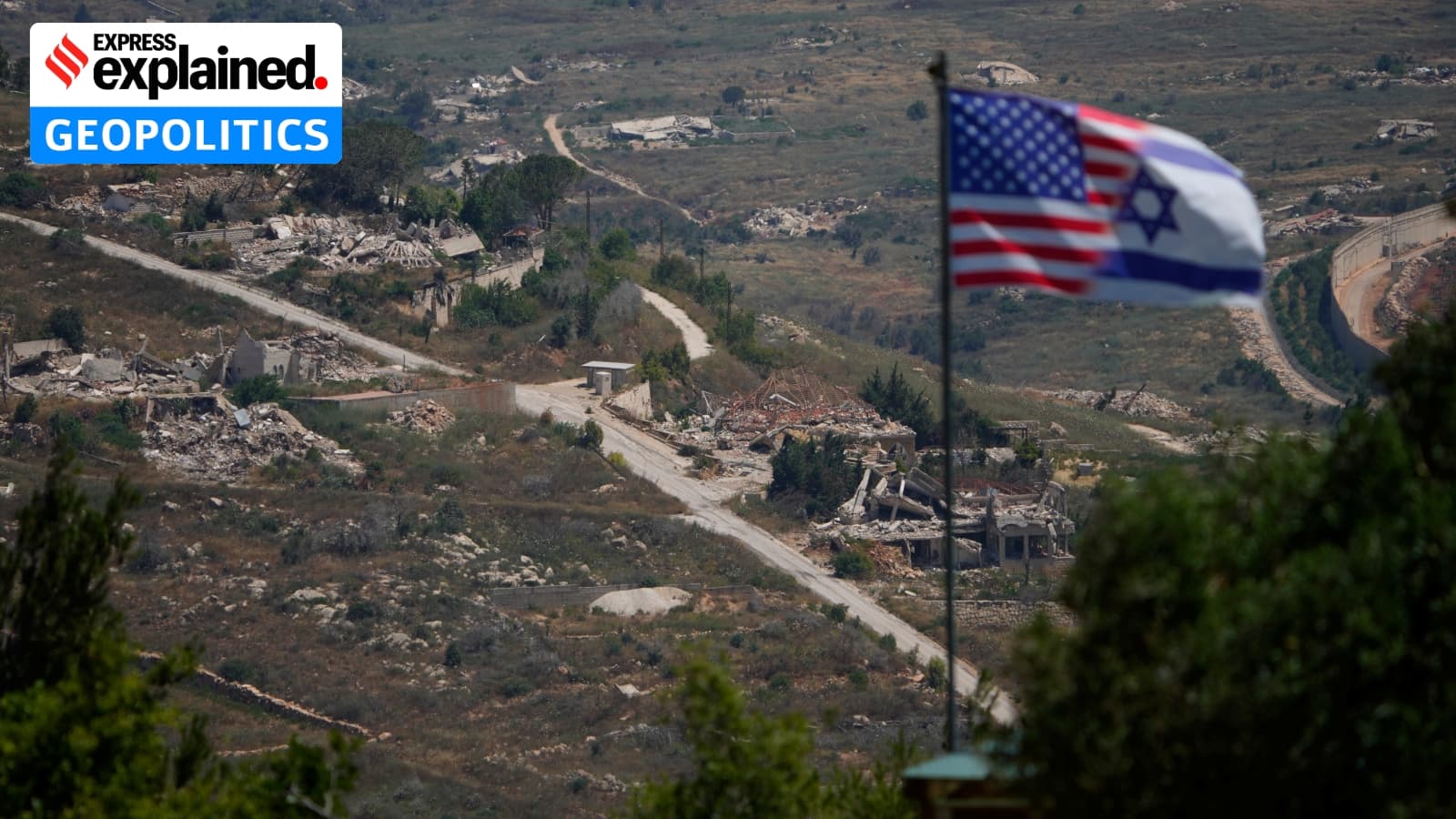
To ward off persistent border threats, the states have often resorted to creating buffer zones. Israel’s presence in southern Lebanon reflects this doctrinal mindset, evident from the IDF’s efforts to create a zone south of the Litani River (which flows from central to southern Lebanon) free of Hezbollah presence.
It is broadly in sync with the principles of UN Security Council Resolution 1701, which had ended the 2006 conflict. It had the provision of creating a demilitarised zone between the Israel-Lebanon border and the Litani River. Since the mechanism failed to control Hezbollah’s expansionist design, Israelis now want to physically control the sensitive belt. A woman collects her belongings from her destroyed house following a ceasefire between Israel and Hezbollah in the village of Maifadoun, southern Lebanon, on June 22, 2026. Photo: AP/PTIIsrael’s Lebanon challenge is not purely military. Beirut’s competing power centres have created political in