Blue Origin's lunar lander mockup is ready for NASA Artemis astronaut training
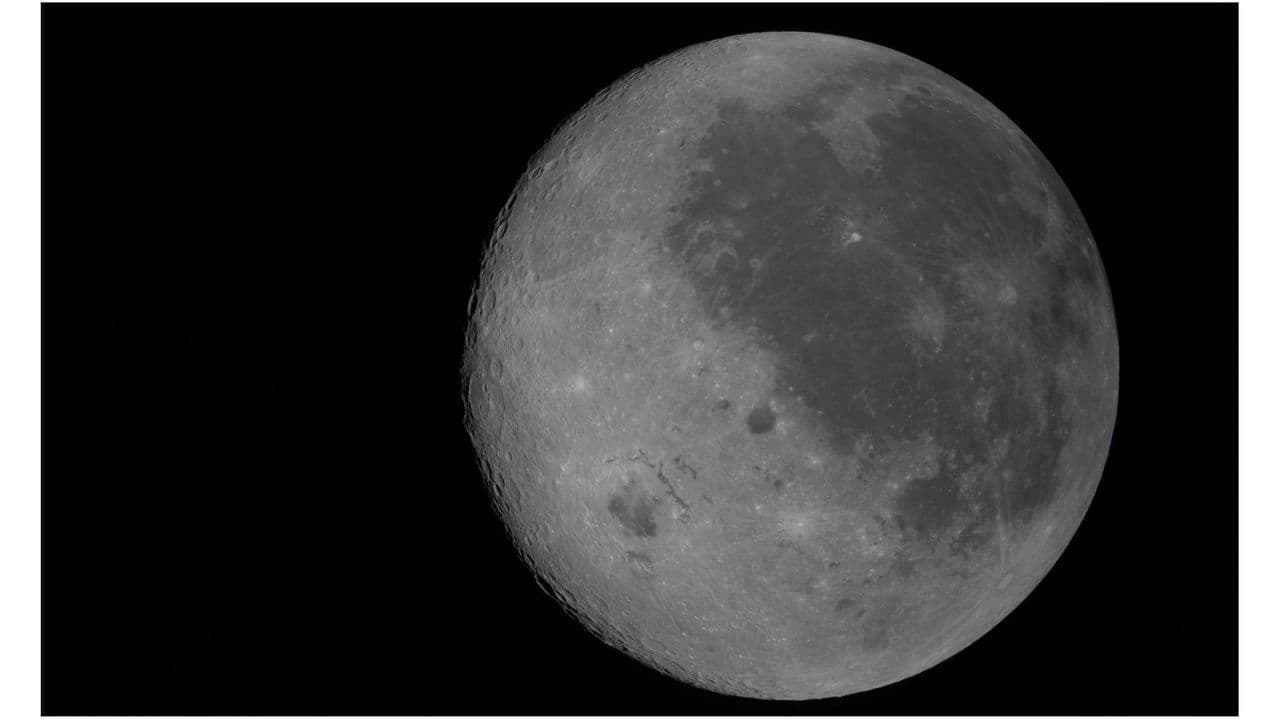
This image of the moon was taken by the Artemis 2 mission during its lunar flyby on April 6, 2026. (Image credit: NASA) If you stand outside the old Corn Exchange in Bristol, you'll see a clock with two minute hands above the entrance. One hand is set to London time, the other to Bristol's — ten minutes behind. The lag is because the sun reaches its peak over the second city a little bit after the first.Of course, when it comes to scheduling anything with bounds beyond one city, having two poses an issue. This is why, in 1840, the British company Great Western Railway imposed what it called "Railway Time" across its whole network of trains, establishing Greenwich Mean Time as the first standardized time. And it's still the time zone used in the U.K. today. However, when several towns refused to adopt the time established by the Royal Observatory in Greenwich, the solution was to use two minute hands instead of one. And so the three-handed clock came to be.That compromise could soon repeat itself in a less likely location: the moon.The U.S. and China, the two largest space powers, disagree on what time it is on the moon. That's a problem because experts say satellites from one country will be unable to coordinate with spacecraft from the other during future space missions — which could risk accidents.The White House has tasked NASA with establishing Coordinated Lunar Time (LTC) as a universal time on the moon, which would set the standard for NASA's LunaNet satellite system. But China has other ideas.China's Chang'e Program, named after the Goddess who flew from the Earth to the moon in Chinese folklore, is the only space program with active lunar relay satellites, Queqiao-1 and Queqiao-2. These relay satellites are the first basis of a moon-wide GPS system meant for future space missions could rely on, meaning they compete with NASA's LunaNet — and because of the way GPS works, these satellites will need a standardized time situation. China is also the only space power to have landed spacecraft on the far side of the moon, where radio signals from Earth are blocked, proving it can coordinate landings without relying on commands from home.In other words, while the U.S. surpasses China in terms of total space missions, the relay satellites could give China the edge when it comes to establishing the first lunar GPS system for future moon landings. China also hasn't agreed to use LTC for this system, raising the prospect that timekeeping standards could diverge.Moon Race 2.0 Last year, experts warned U.S. Senators that China is set to win the moon race — the 21st century race to secure lunar resources establish a human presence on the moon — unless space operations receive more funding. Scientists further pointed out funding issues that could impact U.S. leadership in the lunar arena and wavering political commitment to Gateway, the space station intended to serve the Artemis moon program.Private space-faring companies are also looking to governments to set international standards before spending money on expensive equipment. If China sets the standards before the US, private companies might gear with investments for Chinese customers, giving the country the edge over competitors."If everybody has their own standards, the complication increases for the user and manufacturers," says Bijunath Patla, a theoretical physicist at the National Institute of Standards and Technology (NIST). "So there is a chance of making some mistakes, errors, and interchanging, and then having a mishap."GPS works by having satellites broadcast time signals. If the clocks on the satellites disagree, even by a microsecond, the GPS positioning can shift by hundreds of meters. In an emergency landing, that difference could prove expensive, or even fatal in the case of a human spaceflight mission. A visualization showing some of the main tenets of NASA's Artemis moon program. (Image credit: NASA)If you take out the cellphone in your pocket, or look at the r